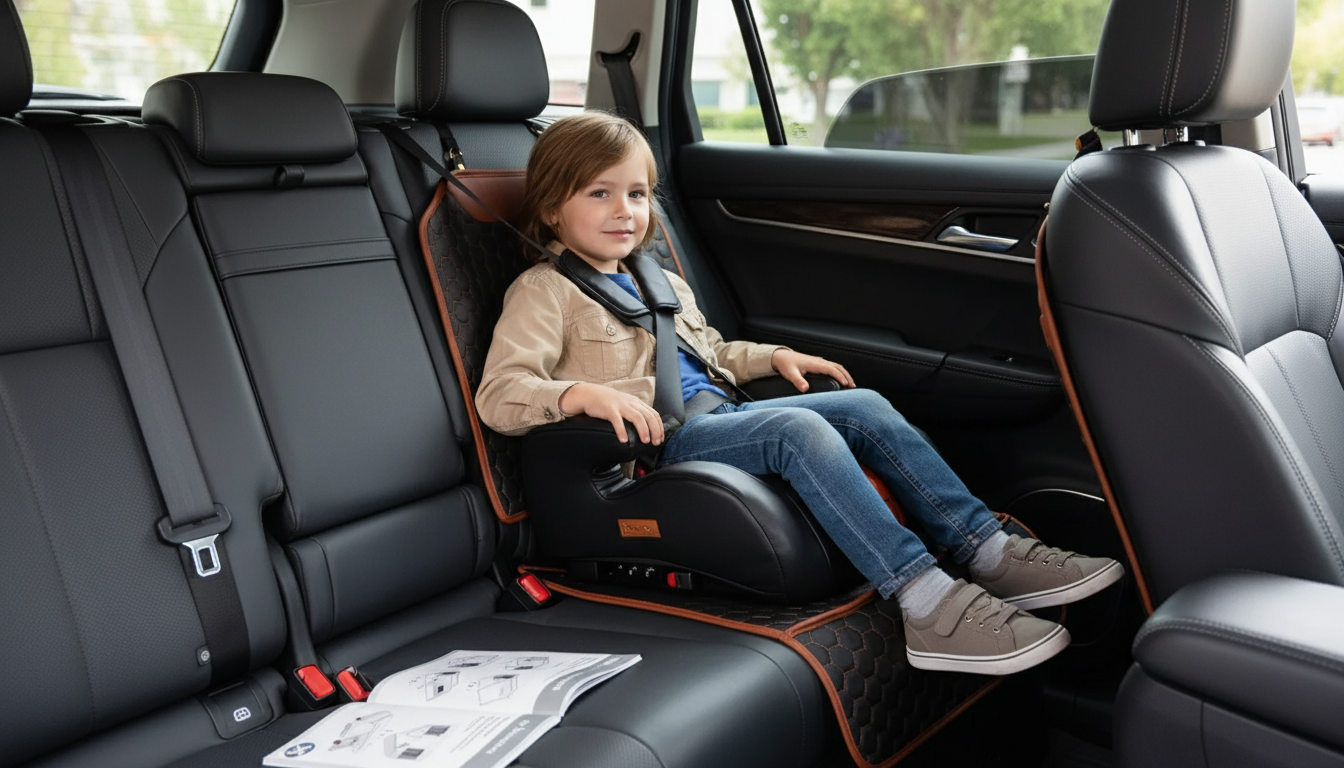
A booster seat helps an older child get a safer belt fit by positioning the vehicle’s lap and shoulder belt where it can work best. The goal is simple: the belt stays on the strong parts of the body, and the child stays properly seated for the entire ride. Below are practical checkpoints for readiness, how backless boosters compare to high-back models, what to confirm in your specific vehicle, and why a backless booster with LATCH can feel easier day to day.
Below are practical points for what a booster seat actually does.
For general child passenger safety guidance, see NHTSA’s car seat and booster seat recommendations and the American Academy of Pediatrics family guide.
Below are practical points for when to switch from a harness seat to a booster.
Backless boosters and high-back boosters can both be safe when they deliver a correct seat belt fit and match the child’s behavior. The “best” option is the one that keeps the belt in the right place on every ride.
| What you see | Likely cause | What to try |
|---|---|---|
| Shoulder belt touches the neck/face | Child sits too low or belt geometry is awkward | Try a different booster height/shape; consider a high-back booster for better belt routing |
| Lap belt rides up on the belly | Slouching or booster not positioning correctly | Have child sit back, adjust bulky clothing layers, verify booster sits flat; switch booster if needed |
| Shoulder belt keeps slipping off | Child posture or vehicle belt angle | Check headrest support and posture; consider high-back booster |
| Booster slides around when child climbs in | Smooth seat upholstery or lightweight booster | Use a booster with LATCH; confirm it’s attached correctly |
If you want a backless booster that stays put between drop-offs, look for a model designed with LATCH stability in mind. The Backless Booster Seat with LATCH | “Snug Bug” by Owleys is a backless booster format intended for belt positioning, with added LATCH to help keep the seat stable when not occupied.
Switch once your child outgrows the forward-facing harness seat’s height/weight limits and can sit properly for the entire ride. The right time is when belt fit is consistently correct and your child has the maturity to stay positioned.
Age alone isn’t enough—size, belt fit, and behavior matter most. A backless booster tends to work best when the vehicle provides head support and the shoulder belt naturally fits across the chest and mid-shoulder.
Many 4-year-olds still do best in a forward-facing harness seat, especially if they nap in the car or can’t stay upright without slouching. A booster is a better match once mature sitting behavior and consistent belt fit are both reliable.
Be part of the Owleys Adventure Club and unlock members-only offers every month.
Choose the adventure that speaks to you and receive tailored recommendations from the Owleys Adventure Club.
Hooray! You're now on the Owleys Adventure Club list! We’re so grateful for our customers and couldn’t be happier to have you in the club.
Check your inbox to find a personalized selection made just for you.Please ensure all fields are completed correctly.
error
Leave a comment