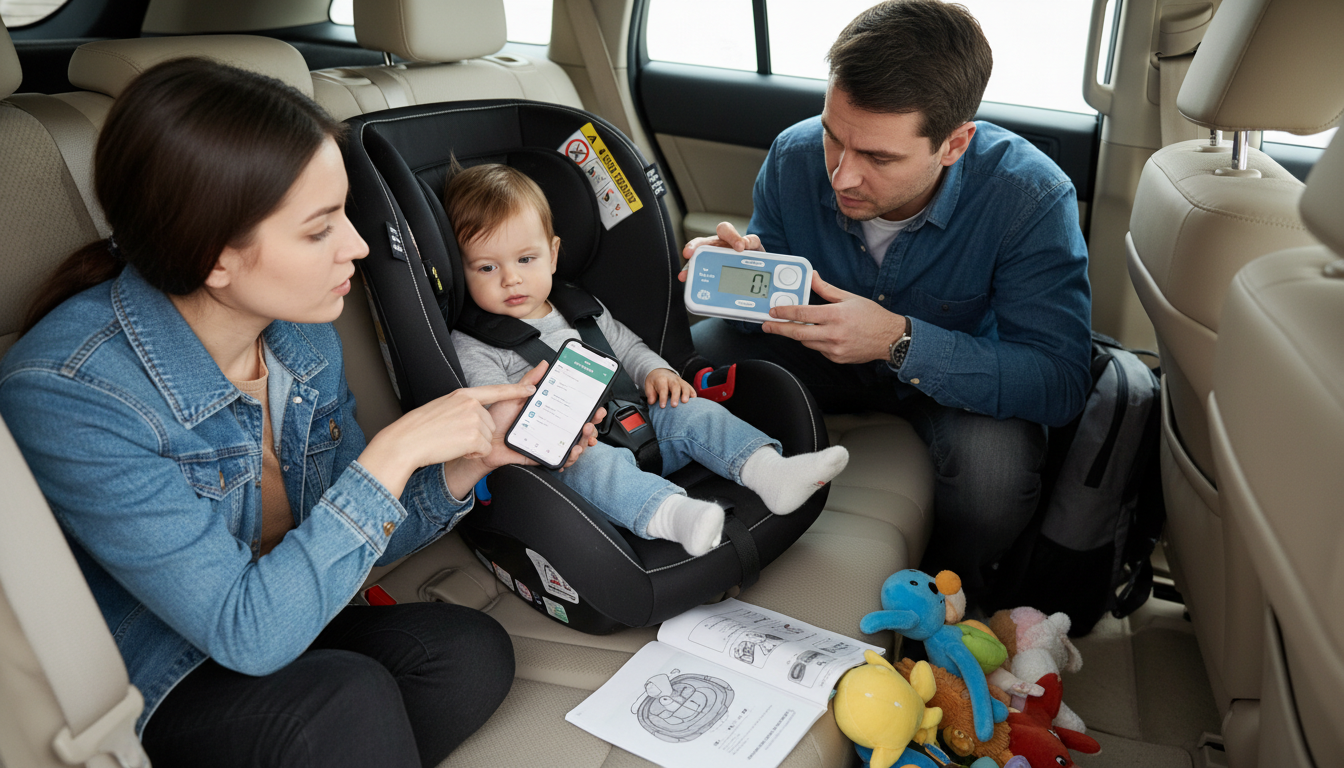
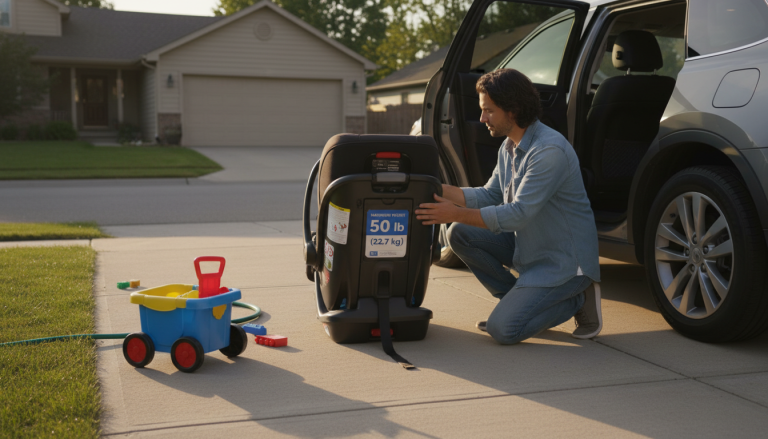
Stop using a rear-facing car seat when your child reaches the rear-facing weight limit (or height limit) listed on the car seat’s label and in the manual—not a universal number. Many convertible car seats allow rear-facing to 40–50 pounds, while some all-in-one models go even higher. If your child is still under the limit, rear-facing is typically the safer option because it supports the head, neck, and spine in a crash.
Check three things: (1) the maximum rear-facing weight, (2) the maximum rear-facing height, and (3) the required head clearance. Many seats require the top of your child’s head to be at least 1 inch below the top of the car seat shell (or another measurement specified by the manufacturer). If your child exceeds any one of those limits, it’s time to switch to forward-facing in a harnessed seat—assuming they meet the minimum forward-facing requirements too.
Parents often worry about bent legs or feet touching the vehicle seat; those aren’t usually reasons to stop rear-facing. The deciding factor is outgrowing the seat’s rear-facing limits. If your child’s shoulders no longer fit comfortably at the correct harness height for rear-facing (as directed by the manufacturer), that can also indicate they’re at the edge of proper fit.
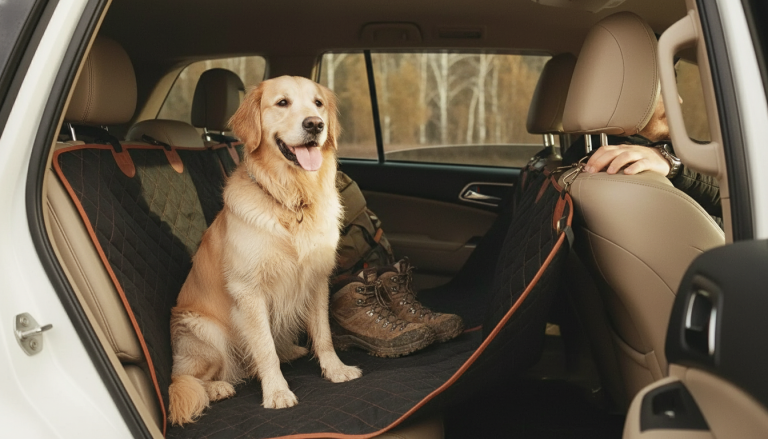
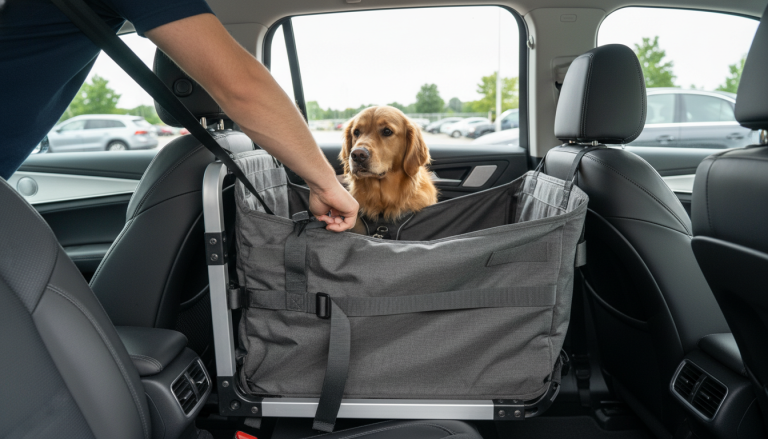
Even with kids and car seats in the mix, a clean, protected back seat can make trips easier. If you’re also traveling with pets, keeping the cargo area and upholstery protected helps reduce distractions and cleanup. For a related travel setup guide, see this hard-bottom dog hammock guide.
Age alone doesn’t determine it. Most kids should stay rear-facing until they reach the rear-facing height or weight limit of their specific seat, which is often somewhere between ages 2–4 (or longer).
It depends on the car seat’s forward-facing minimums, but many babies at 22 pounds are still safer rear-facing if they haven’t outgrown rear-facing limits. Follow the seat label and manual for minimum age, weight, and fit requirements.
In many cases, yes—if the child still fits within the rear-facing limits of the car seat. Rear-facing generally offers better protection for toddlers’ heads and necks.
Be part of the Owleys Adventure Club and unlock members-only offers every month.

Choose the adventure that speaks to you and receive tailored recommendations from the Owleys Adventure Club.
Hooray! You're now on the Owleys Adventure Club list! We’re so grateful for our customers and couldn’t be happier to have you in the club.
Check your inbox to find a personalized selection made just for you.Please ensure all fields are completed correctly.
error
Leave a comment