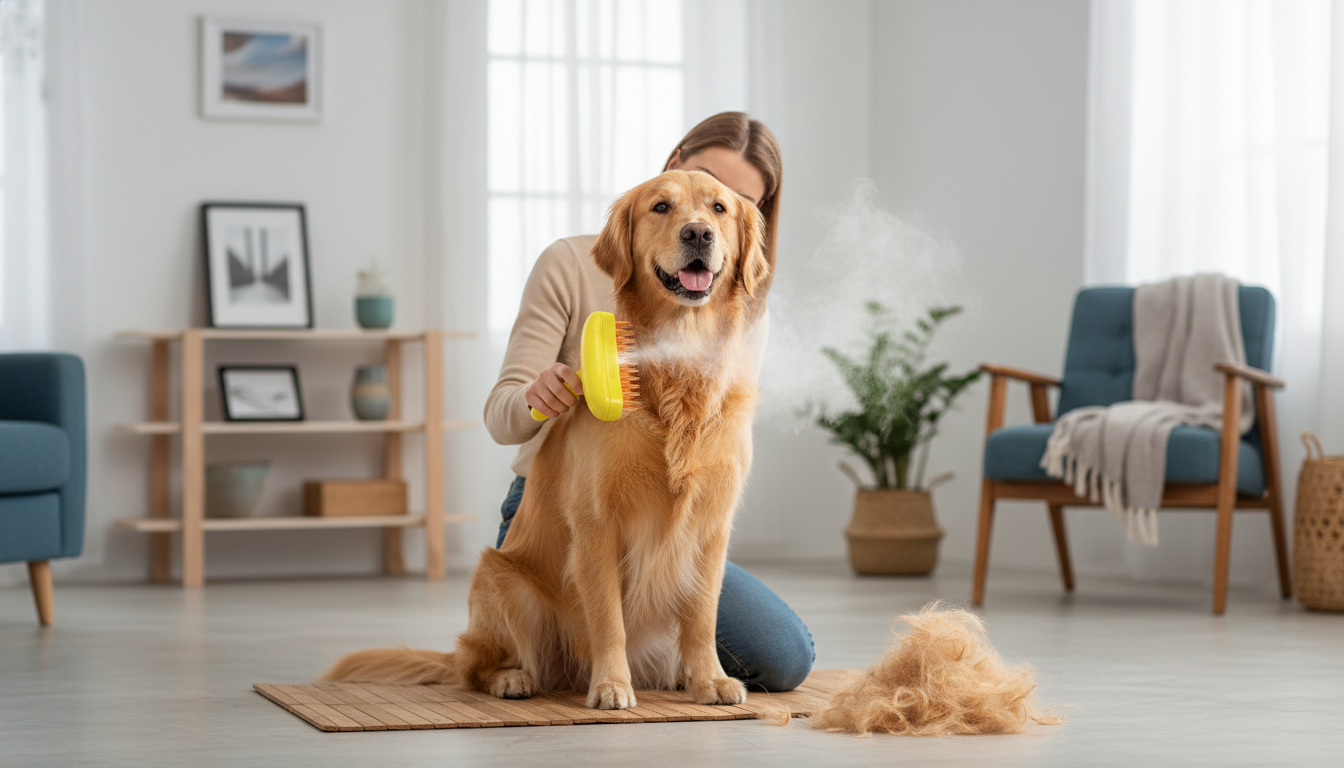
Regular brushing helps control shedding, prevents tangles, and keeps skin comfortable—but many dogs dislike static, pulling, or dry brushing on sensitive areas. A steam grooming brush adds gentle moisture to help catch loose fur and reduce flyaways, making routine coat care feel smoother and more controlled at home.
A steam brush is designed to make everyday coat maintenance easier, especially when loose hair tends to float around the room or cling to clothing. Used correctly, it can turn quick brush-outs into a calmer, more efficient routine.
For broader grooming fundamentals—like brushing frequency, coat checks, and handling tips—authoritative guides from the American Kennel Club and the ASPCA align well with the idea of keeping sessions gentle, consistent, and positive.
When shedding ramps up, the hardest part is often the mess: hair drifting through the air, sticking to hands, and spreading to furniture before it ever reaches the trash. Mist-assisted brushing helps keep loose coat more contained, which can make quick sessions feel more “worth it.”
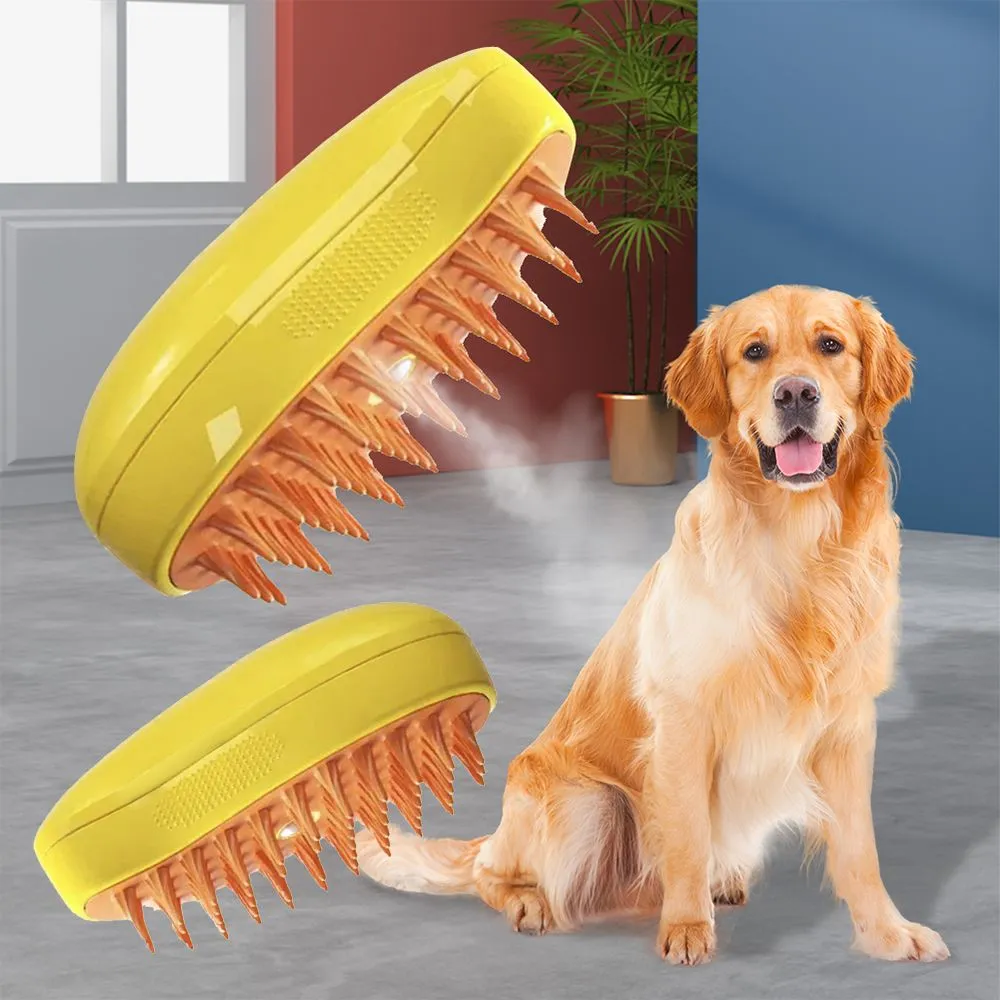
If you’re setting up a simple grooming routine at home, the Dog Grooming Brush, Pet Steam Brush | “Vapor” by Owleys is built for easy de-shedding support and more controlled coat care between baths.
Different coats respond differently to brushing tools and technique. The goal is always the same—remove loose hair comfortably—while adjusting session length, pressure, and how you work through the coat.
| Coat type | Session length | Technique | What to watch for |
|---|---|---|---|
| Short / smooth | 3–8 minutes | Long strokes with light pressure | Over-brushing irritated spots |
| Double coat | 5–12 minutes | Section brushing; repeat passes | Pressing too hard; brushing against growth |
| Medium / long | 5–10 minutes | Work in layers; start at ends if tangly | Skipping undercoat areas behind ears/legs |
| Curly / mat-prone | 3–8 minutes | Gentle smoothing; combine with detangling steps | Tugging through knots; hiding mats near armpits |
The best results come from comfort-first handling. A dog that tolerates grooming calmly will get more consistent coat care than a dog that’s pushed through long, stressful sessions.
If your dog’s coat or skin seems unusually dry, itchy, flaky, or thin in patches, it’s worth reviewing possible underlying causes (allergies, parasites, hormonal issues). The Merck Veterinary Manual offers a helpful overview of coat and skin concerns that may require veterinary guidance.
Should you brush a shedding dog? Yes. Brushing a shedding dog is one of the simplest ways to control loose hair, reduce mats, and keep the coat and skin healthi…
Subscribe for Owleys product launches, fresh car accessories, and exclusive Adventure Club savings up to 30% OFF.

Choose the adventure that speaks to you and receive tailored recommendations from the Owleys Adventure Club.
Get ready for exclusive member discounts, early access to new products, special gifts, and travel inspiration from the Owleys team.
Your guide will arrive within 5 minutes.Please ensure all fields are completed correctly.
error

Leave a comment