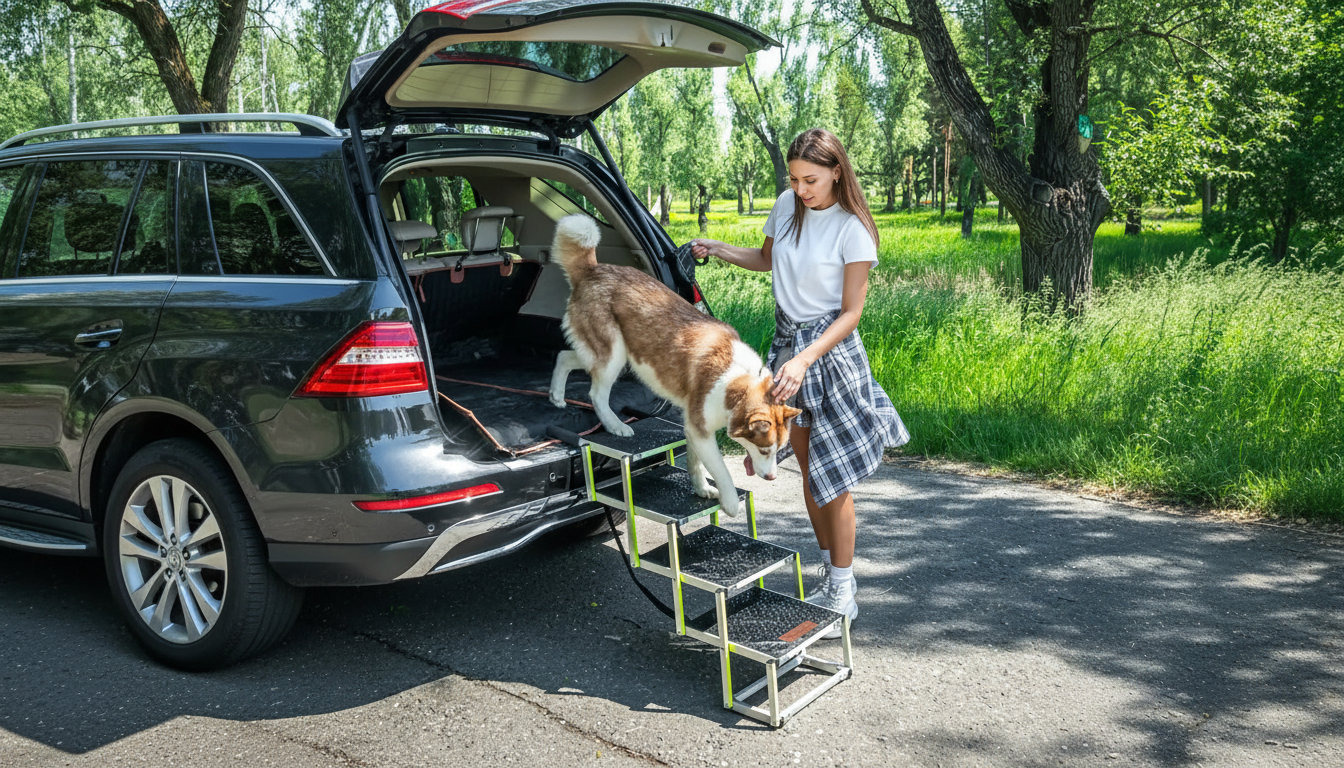
Getting a dog into an SUV, crossover, or truck bed can strain joints, stress older pets, and create awkward lifting for owners. A tailgate-ready ramp helps dogs enter and exit more confidently, especially after long rides, hikes, vet visits, or on slippery surfaces. This guide covers when a ramp is most helpful, what to look for in a tailgate setup, and how to train a dog to use it smoothly. For more guidance, see How To Keep Your Great Pyrenees Safe In The Car.
Tailgate height is deceptively tough on dogs. The jump down is often the bigger issue than the climb up, because impact lands on wrists, elbows, shoulders, and hips. For further reading, see Best Dog Ramp for Car – Service Dogs & Working Retrievers.
For dogs with arthritis or stiffness, reducing repeated jumping is a practical way to protect comfort day to day. For more on recognizing and managing joint pain, see guidance from the American Kennel Club and home-support tips from AAHA.
| Vehicle setup | Common challenge | Ramp feature to prioritize |
|---|---|---|
| SUV / crossover cargo area | High step down to pavement | Stable base + good traction |
| Truck tailgate | Steeper angle when parked unevenly | Wide walking surface + sturdy frame |
| Lifted vehicles | Extra height increases fear and joint impact | Gentler incline + secure positioning |
| Rear hatch with narrow opening | Limited side clearance | Non-slip surface + easy alignment |
A ramp can look “fine” in the garage and still feel sketchy to a dog at the tailgate. The details below are the difference between a ramp that gets used and one that becomes trunk clutter.
If a dog is “brave” going up but balks going down, it’s often not stubbornness. It’s a traction-and-confidence issue, especially when the transition at the top feels slippery or the incline looks steep from above.
For tailgate-style loading, setup consistency matters. Dogs notice small changes in angle, wobble, and where the ramp meets the vehicle.
If you want a ramp designed specifically for tailgate loading, see the Car Dog Ramp “Tailgate” by Owleys. For many dogs, a predictable setup routine (same side, same angle, same cue) helps the ramp feel like part of the ride rather than a surprise obstacle.
The most effective ramp training is boring in the best way: short, repeatable, and low-pressure. The goal is steady feet—not speed.
To keep the loading zone clean and make ramp time smoother, consider keeping supplies separated and easy to grab. The Car Trunk Organizer “Hexy” (17.7 in) can hold wipes, a towel, treats, and a spare leash so you’re not digging through loose cargo at the tailgate.
If your dog rides in the back seat on some trips and the cargo area on others, having a dedicated place for travel essentials helps maintain consistency. The Car Back Of Seat Organizer “Hexy” by Owleys is an easy way to keep ramp rewards, wipes, and a small towel within reach.
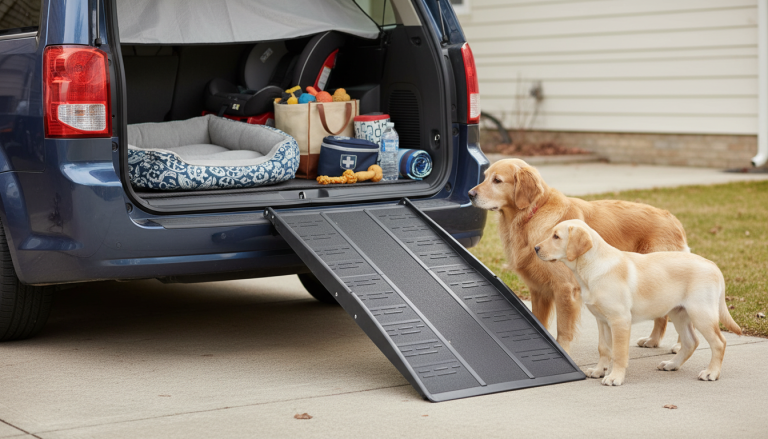
Yes—car dog ramps are designed to bridge the gap from the ground to the cargo floor or tailgate, reducing jumping and making entry/exit easier for dogs of many sizes.
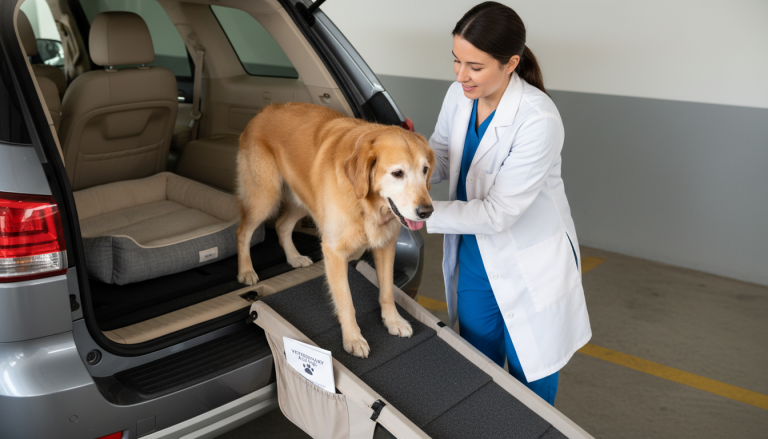
Many veterinarians commonly suggest ramps or steps for dogs with arthritis, mobility limitations, post-surgery recovery, or breeds prone to joint and back issues, because reducing repeated jumping can lower strain.
Big-box retailers often carry a range of pet ramps, but availability and specifications vary by location and online inventory; compare traction, stability, length, and load rating to the dog and vehicle height.
Be part of the Owleys Adventure Club and unlock members-only offers every month.
Choose the adventure that speaks to you and receive tailored recommendations from the Owleys Adventure Club.
Hooray! You're now on the Owleys Adventure Club list! We’re so grateful for our customers and couldn’t be happier to have you in the club.
Check your inbox to find a personalized selection made just for you.Please ensure all fields are completed correctly.
error
Leave a comment