
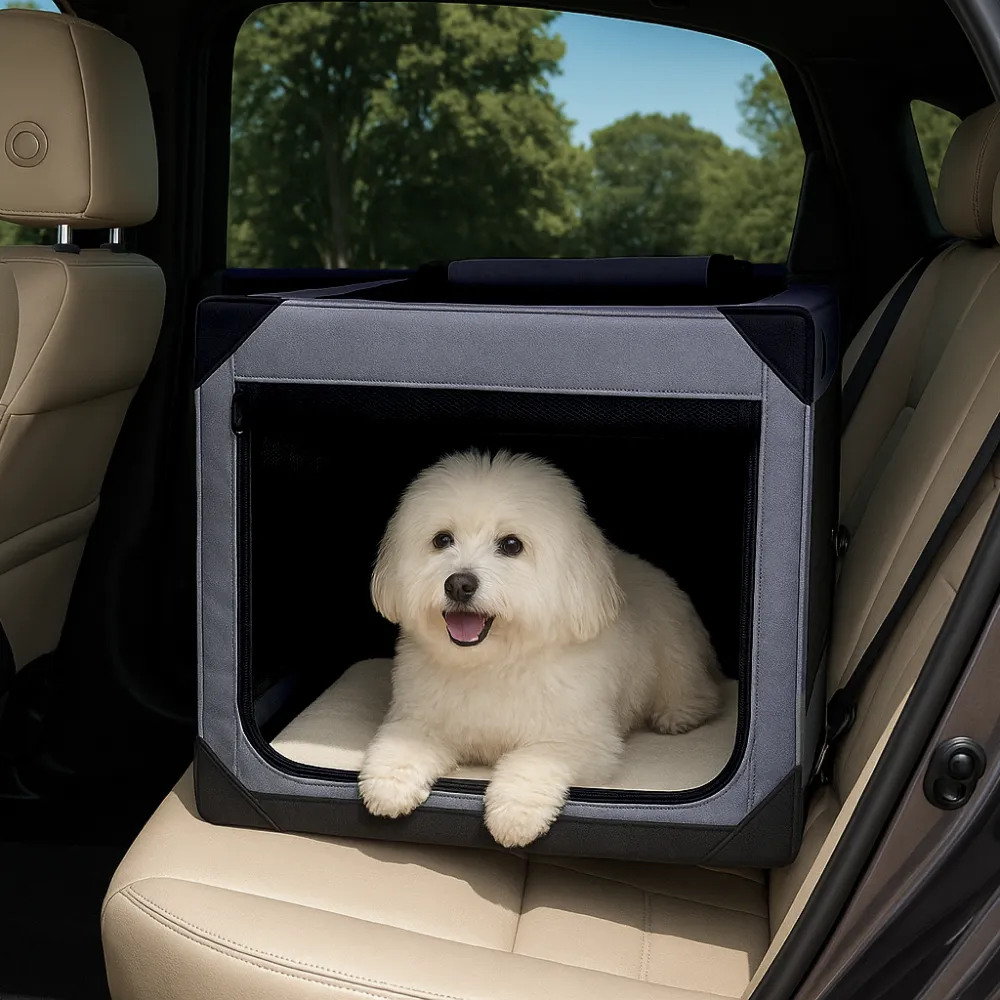
What are the requirements for a dog crate on a plane? Airline-approved dog crates must meet a mix of safety, size, and construction rules designed to keep pets…
Read guideOwleys Quick Kennel: Foldable Travel Dog Crate Guide
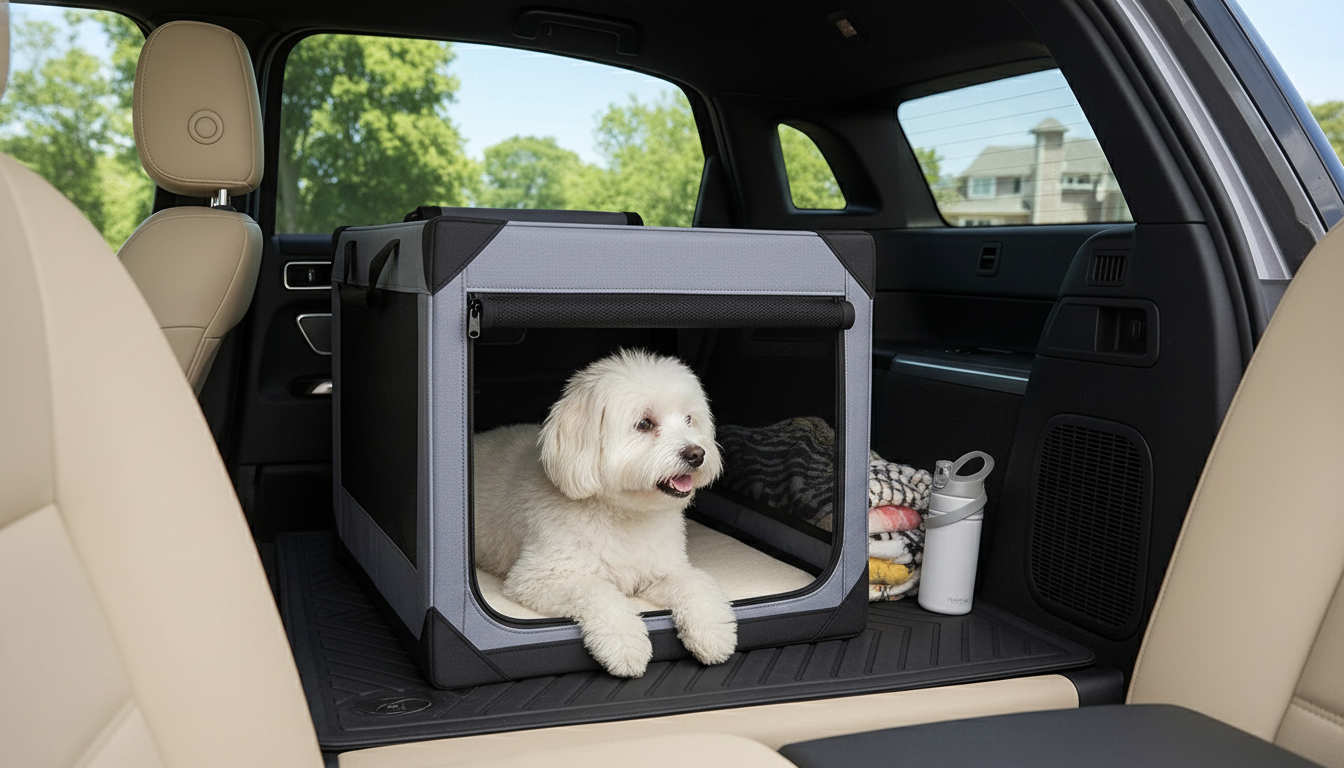
$79.99
Quick Kennel price
was $114.40 · out of stock
4.9★
51 reviews
Customer rating on product page
30%
Product page deal
save $34.41
7.6 lb
Product weight
Listed product specification
The Quick Kennel, explained: a travel crate that folds flat, carries easily, and sets the tone for routine
“Quick Kennel” by Owleys is a foldable pet crate designed for travel days, quick setups, and easy storage. Whether the plan is a weekend road trip, a hotel night, or an afternoon at a relative’s house, a portable crate can give your dog a familiar “place” to rest—without turning packing into a project.
This guide focuses on what a foldable travel kennel is meant to do, which features matter most in real use, how to choose a workable size, and how to set it up so your dog actually wants to settle in it.
What a foldable travel crate is designed to do (and what it’s not)
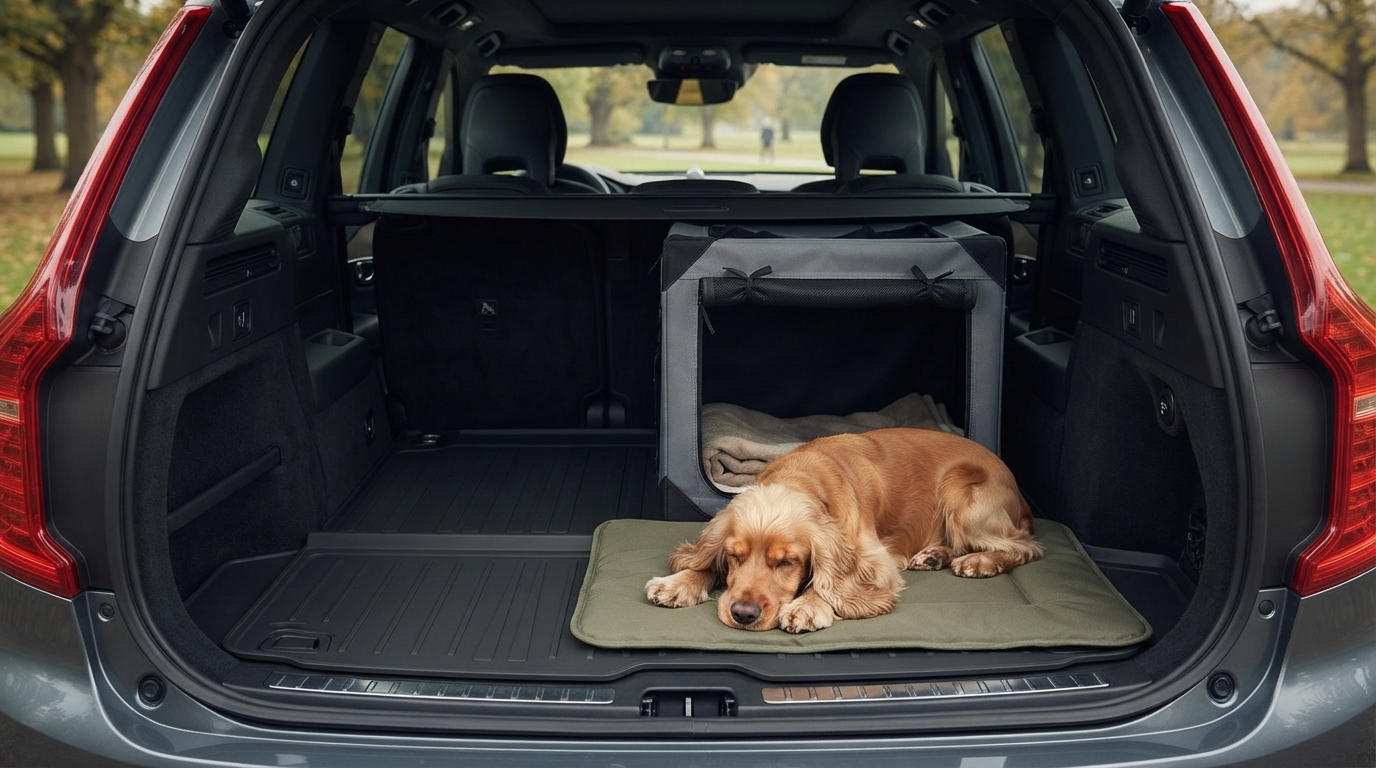
A travel crate earns its keep when it supports routine away from home. The goal isn’t to confine a dog unnecessarily—it’s to create a predictable rest spot in unfamiliar spaces.
- Create a familiar, enclosed resting spot during travel breaks, hotel stays, and day trips
- Fold down for compact storage at home or in the car when not in use
- Set up quickly so the crate gets used consistently (consistency matters for training and routine)
- Support calmer behavior by offering a predictable “place” in new environments
Crate comfort and safety basics still apply on the road. For general crate-training guidance and best practices, see the American Veterinary Medical Association (AVMA) crate training resource and the ASPCA’s crate training tips.
Key features worth prioritizing for travel
Travel crates get handled more often than home crates, so the small details—how it folds, how stable it feels, and how it wipes clean—become the whole story.
- Fast setup and breakdown: fewer steps means you’ll actually use it during real stops
- Secure structure: firm corners and reliable closures help the crate feel steady
- Ventilation and visibility: airflow plus sightlines can help many dogs relax in new places
- Easy-to-clean surfaces: travel crates meet dirt, sand, and spilled water
- Carry and storage details: folded size and a practical handle matter when you’re moving from car to room
| Need | Why it matters | What to check |
|---|---|---|
| Simple folding | Faster routine and less fuss during stops | Can one person fold/unfold smoothly |
| Secure structure | Helps reduce tipping and unwanted escapes | Firm corners, minimal flex, dependable closures |
| Airflow | Supports comfort and temperature management | Multiple mesh/open panels, unobstructed vents |
| Cleanability | Travel mess happens | Wipeable surfaces and practical bedding compatibility |
| Portability | Easier carry between car and destination | Handle placement, folded dimensions, total weight |
Fold-flat storageProduct-page feature
Folds flat when not in use for easy storage
Best for packing between road trips
Car-seat attachmentTravel setup
Securely attaches to the car seat with a belt buckle
Built around in-car use
Ventilated soft crateComfort feature
Breathable and comfortable design with mesh windows
Mesh windows listed by Owleys
Sizing and fit: choosing a crate your dog will actually use
Fit is the difference between a crate your dog relaxes in and a crate your dog avoids. The right size allows normal posture changes while still feeling den-like.
- Aim for a size that allows your dog to stand up, turn around, and lie down comfortably
- Avoid oversizing for dogs still learning to settle; extra space can make rest harder for some dogs
- Measure length (nose to base of tail) and height (floor to top of head/ears) and compare with the crate’s interior dimensions
- If between sizes, prioritize safe turning/lying space, then make it cozy with a fitted mat and a familiar blanket
If your dog tends to sprawl, confirm that “lying down comfortably” includes their natural resting style. If your dog curls tightly, a slightly cozier setup plus supportive bedding can feel more secure—especially in a hotel room with unfamiliar sounds.
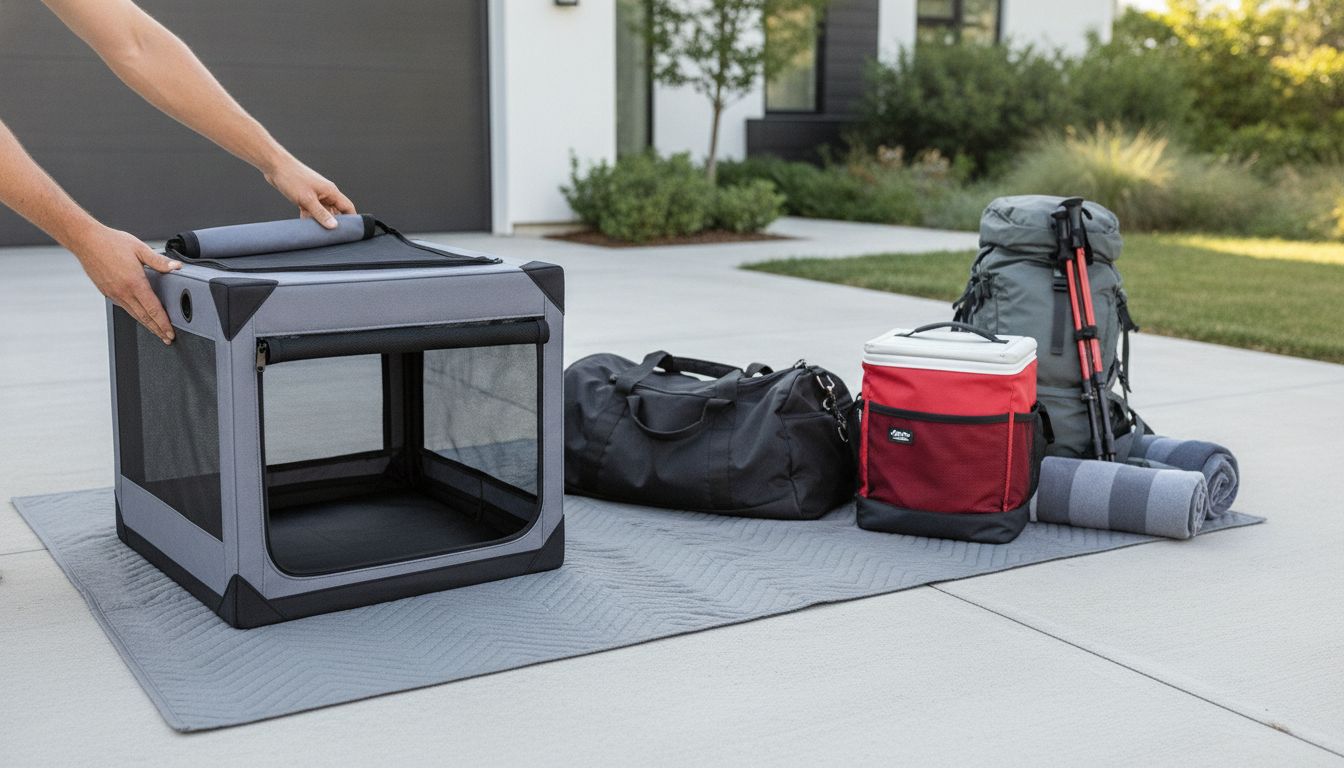
Watch · product page video
“Sturdy and well-made. It fits my two cats in the car comfortably with plenty of room. They seem to enjoy it! 😻”
Owleys product page · Product video
View productBest use cases: where a foldable kennel shines
A foldable kennel is all about repeatability: you can set it up in the same general way in different places, which helps dogs understand what’s expected.
- Road trips: a consistent rest zone during destination days and downtime
- Hotels and rentals: a familiar “home base” in an unfamiliar room
- Visits to friends and family: a clear off-switch when the house is busy
- Events and patios (where permitted): a calm spot between activity
For car-based travel, it helps to keep leashes, wipes, treats, and towels easy to reach. Two practical add-ons are the Car Back Of Seat Organizer | “Hexy” by Owleys and the Car Trunk Organizer | 17.7 in – “Hexy” by Owleys.
1
Fold or unfold the crate for storage
2
Attach it to the car seat with the belt buckle
3
Use the mesh-window design for airflow
Setup tips for calmer crate time
A travel crate works best when it feels like a predictable routine, not an on-the-spot decision. A few small choices can make the space more inviting.
- Start with short, easy wins: introduce the crate at home with the door open and a treat trail before you rely on it during travel.
- Use “place” language consistently: one cue (and one expectation) is easier to generalize across new locations.
- Dial in the environment: in busy rooms, a bit more coverage can reduce visual stimulation; in warm spaces, prioritize airflow.
- Keep it positive: feed a chew or a meal near/inside the crate (as appropriate for your dog) to build a calm association.
- Plan the parking-lot moment: when arriving somewhere new, set up the crate first—before greeting everyone—so your dog has a clear “home base.”
Care, cleaning, and storage (the travel reality check)
Because travel crates encounter more dirt and moisture, the easiest-to-maintain setup is the one you’ll keep using.
- Shake out and wipe down after trips: remove hair and debris before folding it for storage.
- Separate “crate bedding” from “house bedding”: a dedicated mat/blanket is easier to launder and helps keep the travel routine consistent.
- Dry before you fold: if the crate gets damp, allow it to air out first to help prevent lingering odor.
- Store where it stays accessible: the more convenient it is to grab, the more consistently it gets used.
“Sturdy and well-made. It fits my two cats in the car comfortably with plenty of room. They seem to enjoy it! 😻”
FAQ
How long can dogs sleep in a crate at night?
It varies by age, health, and training. Many adult dogs can sleep through the night, while puppies typically need more frequent potty breaks. For dogs with medical concerns or unusual restlessness, a veterinarian can help determine a comfortable schedule.
Is it better for a dog crate to be too big or too small?
Neither is ideal; the correct fit lets your dog stand, turn around, and lie down comfortably. Too small can be uncomfortable or unsafe, while too large may slow housetraining for some dogs. When between sizes, choose the smallest size that still allows comfortable movement and use bedding to keep it cozy.
Is it better to leave a dog in a crate or a room?
A crate can be calming and safer when a dog is trained to relax in it, while a room provides more freedom but requires thorough dog-proofing. The best choice depends on your dog’s comfort, behavior, and how long they’ll be alone, with training and safety as the deciding factors.
Check Quick Kennel availability
$79.99 · out of stock · 4.9★ from 51 reviews
View product details
Leave a comment