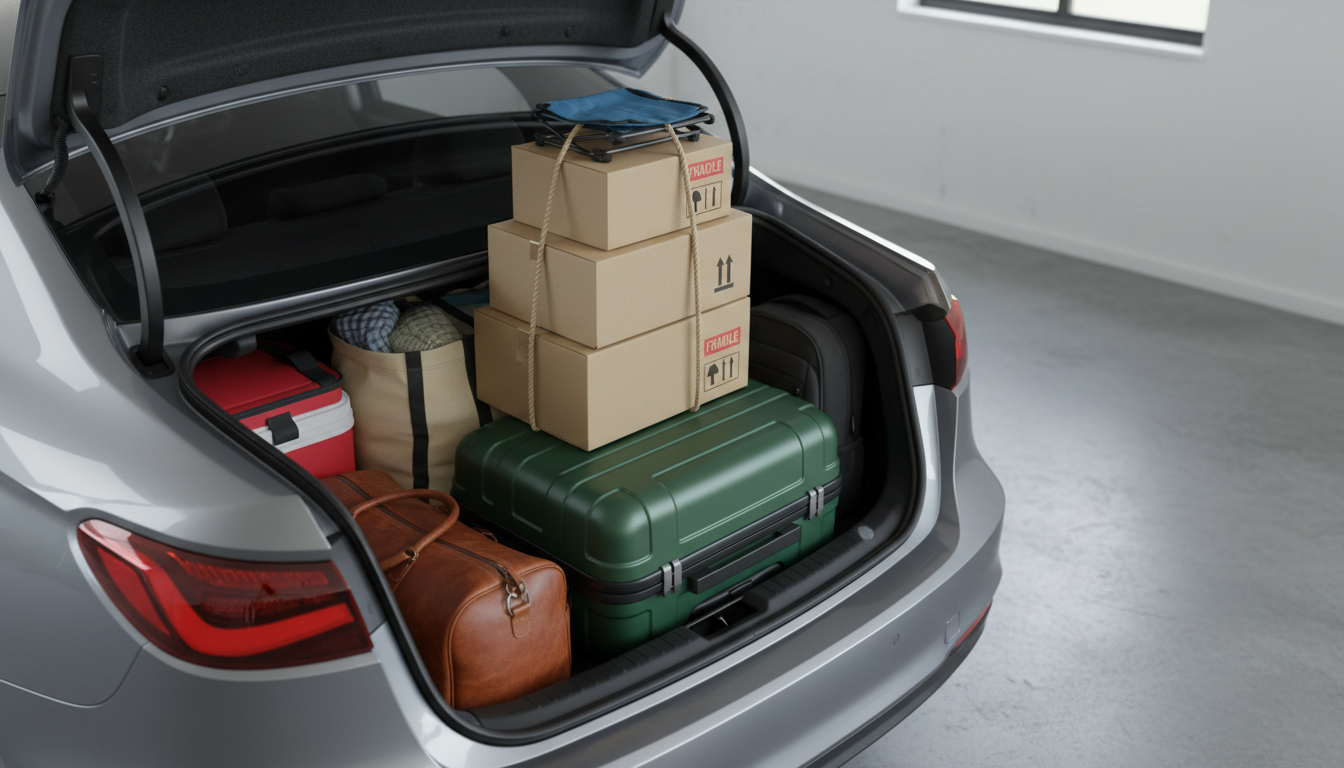
The right amount of weight to put in a trunk depends on two things: your vehicle’s load ratings and how the cargo is positioned. There isn’t one universal “safe” number because trunk floors, hinges, and suspension setups vary widely across sedans, hatchbacks, and SUVs.
Check the owner’s manual or the sticker in the driver’s door jamb for payload information. “Payload” is how much total weight the vehicle can carry (people + cargo). If you’re loading heavy items in the trunk, subtract the weight of passengers and anything else already in the car to estimate what’s left for cargo. Overloading can affect braking distance, steering response, and tire wear, even if everything technically fits.
Put the heaviest items as low as possible and as close to the back of the rear seats as you can. This reduces stress on the trunk’s outer lip and helps keep the car balanced. Avoid stacking heavy loads high or pushing weight all the way to the tail end of the trunk, which can make the rear feel “floaty” and increase bounce over bumps.
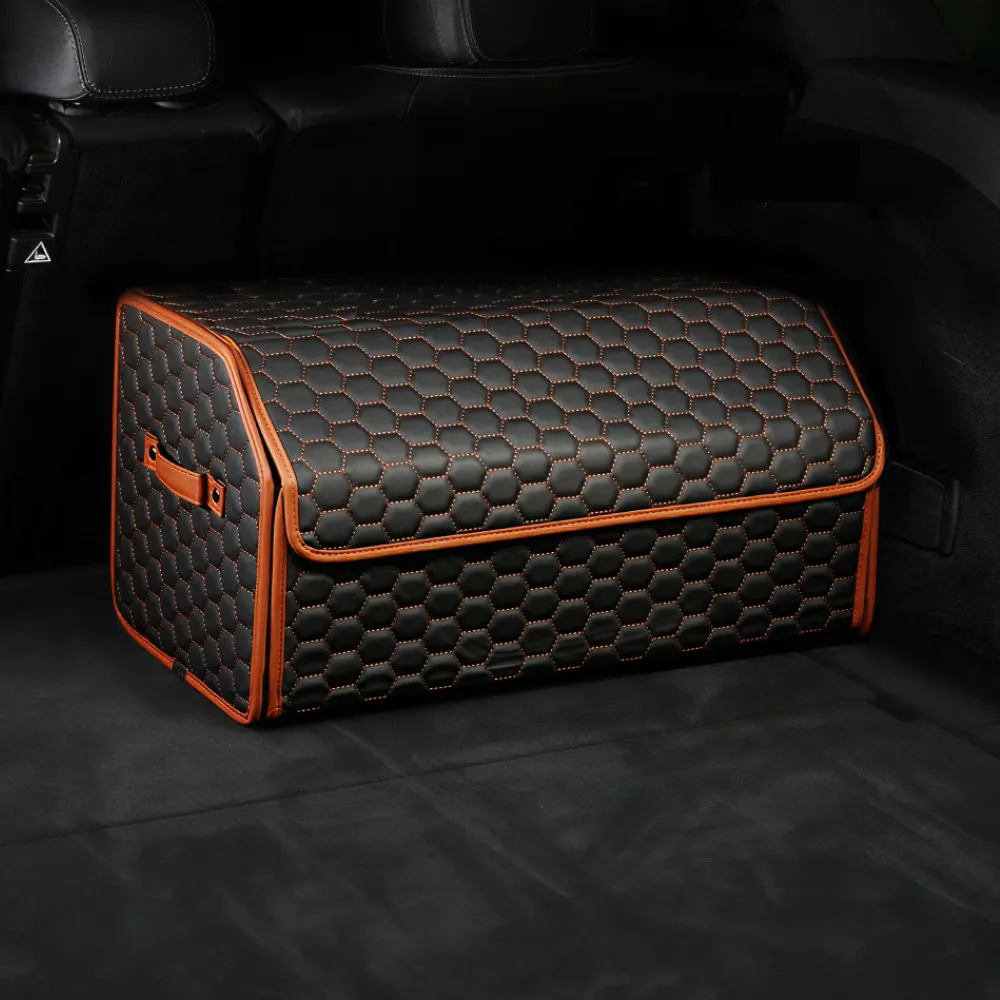
Even moderate weight can become dangerous if it slides during a sudden stop. Use a trunk organizer, straps, or non-slip liners to keep items from shifting. This is especially important for dense cargo like tools, bottled drinks, and hardware—items that can punch through softer bags or knock into the trunk lid area.
If the rear of the vehicle sags noticeably, headlights point higher than usual, or the ride feels unstable over small bumps, lighten the load and redistribute. Also confirm your tire pressures are set for the expected load; many vehicles list a recommended pressure on the door placard.
For tips on keeping trunk loads tidy and stable, see the main guide here: https://owleys.com/guide-owleys-21-6-inch-hexy-foldable-trunk-organizer-velcro-base/.
Use a trunk organizer or cargo blocks to create compartments, and place heavier bags low and toward the rear seats. Adding a non-slip mat helps keep lighter items from drifting when you turn or brake.
Subscribe for Owleys product launches, fresh car accessories, and exclusive Adventure Club savings up to 30% OFF.

Choose the adventure that speaks to you and receive tailored recommendations from the Owleys Adventure Club.
Get ready for exclusive member discounts, early access to new products, special gifts, and travel inspiration from the Owleys team.
Your guide will arrive within 5 minutes.Please ensure all fields are completed correctly.
error
Leave a comment