
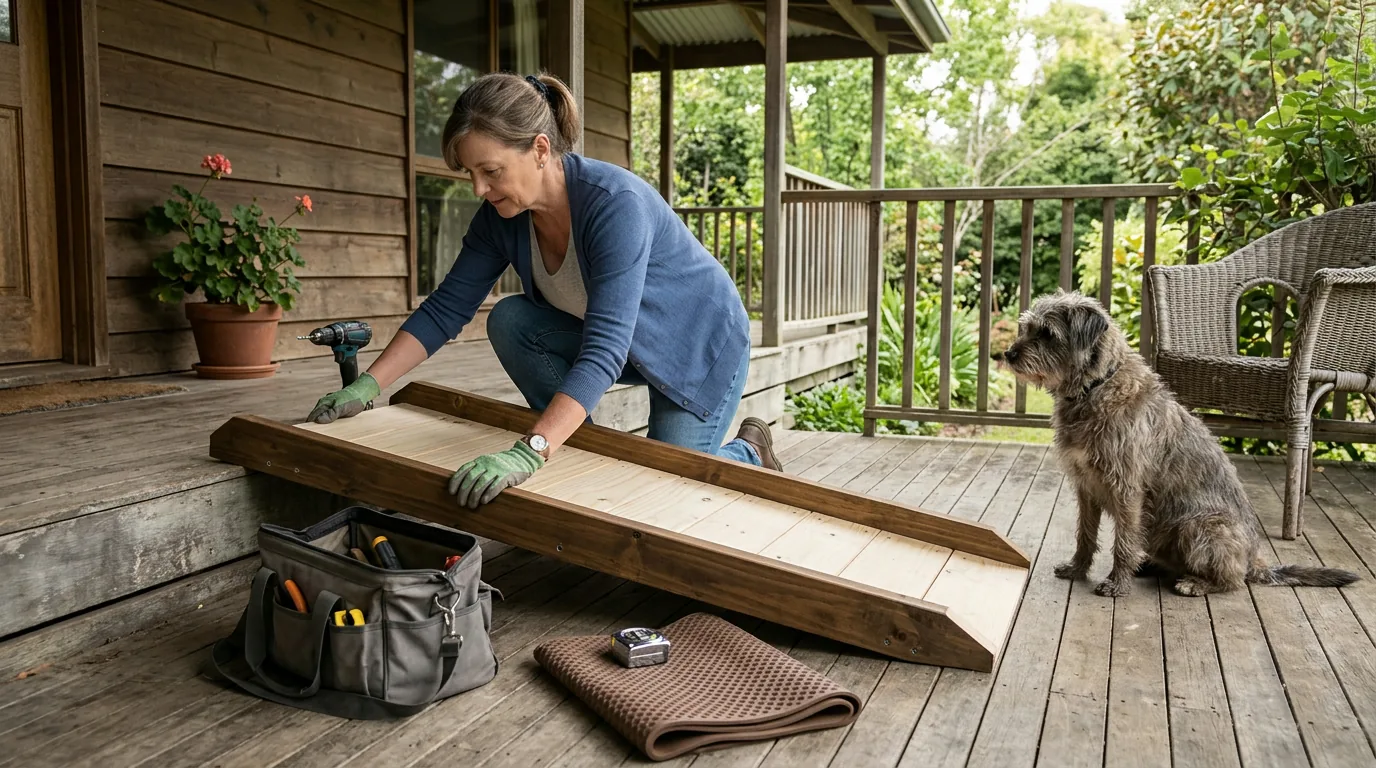
Plan the ramp around your dog and the height
Measure the vertical distance from the ground to the porch, bed, or vehicle entry point, then measure how much clear floor space you have for the ramp. A longer ramp makes a gentler climb, which is especially helpful if your dog is older, small, or hesitant on stairs; for vehicle loading, our guide to dog ramps for SUVs and trucks offers more context.
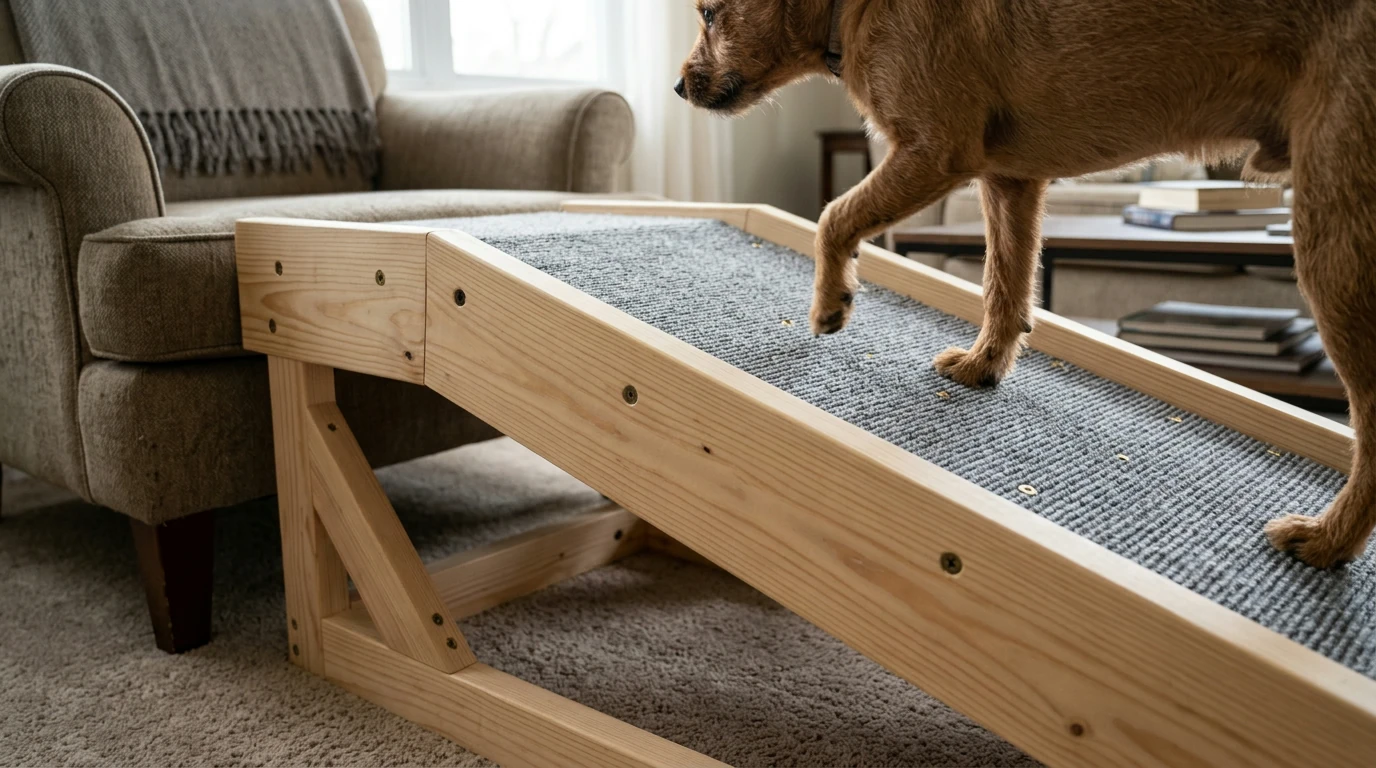
Choose materials and cut the board
Use a sturdy exterior-grade plywood board wide enough for your dog to walk without feeling crowded, along with wood for underside braces and low side rails if your dog needs a clearer path. Cut the board to your planned length, round or sand every edge, and make sure the finished ramp will rest securely at both ends rather than balancing on a narrow lip.
Assemble it for grip and stability
Fasten braces beneath the board so it stays rigid under your dog’s weight, and add side rails without leaving screw tips or sharp corners exposed. Cover the walking surface with securely attached outdoor carpet or another paw-friendly, slip-resistant material; bare, smooth wood can become slippery, particularly when wet.
Test, train, and maintain the ramp
Before your dog uses it, press on the ramp at several points to check for flexing or shifting, and place it on firm, level ground with its top unable to slide away. Let your dog practice with encouragement at a low height first, supervise each climb, and regularly inspect the wood, fasteners, and grip surface for wear; if you prefer a ready-made option for vehicle loading, you can also consider our Car Dog Ramp | “Tailgate” by Owleys.
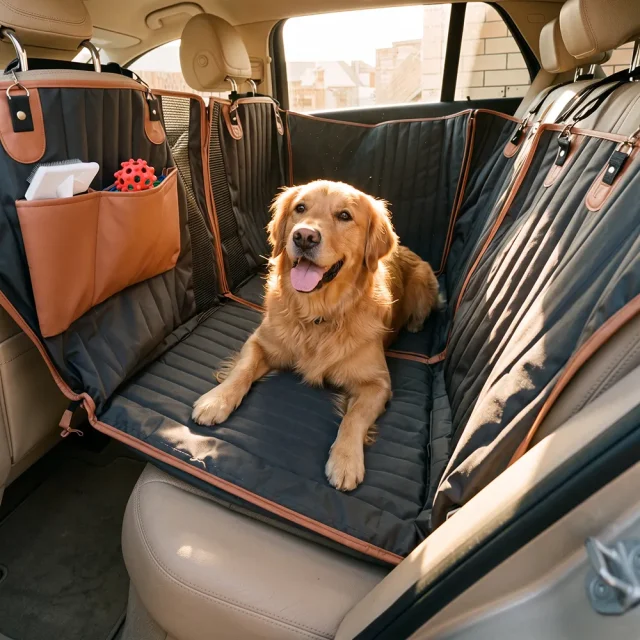
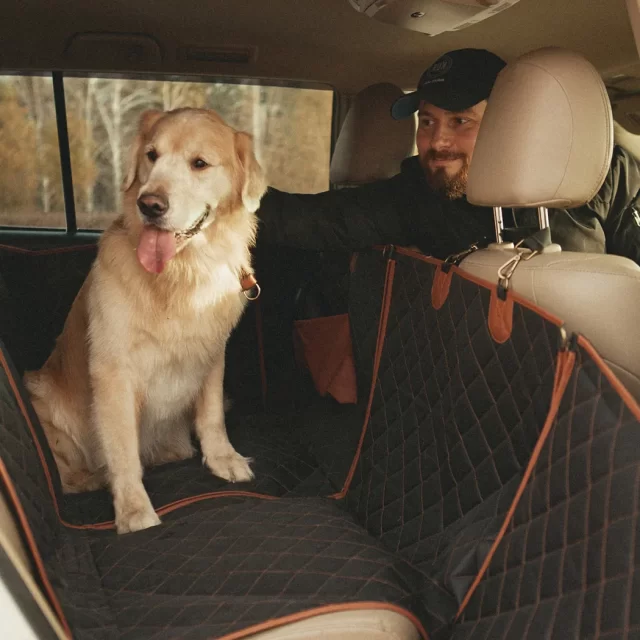
The Travel Buddy Mk. II Dog Hammock keeps the back seat covered, so shed dog fur lands on a washable surface instead of the car upholstery; it pairs with the ramp during the same trip.
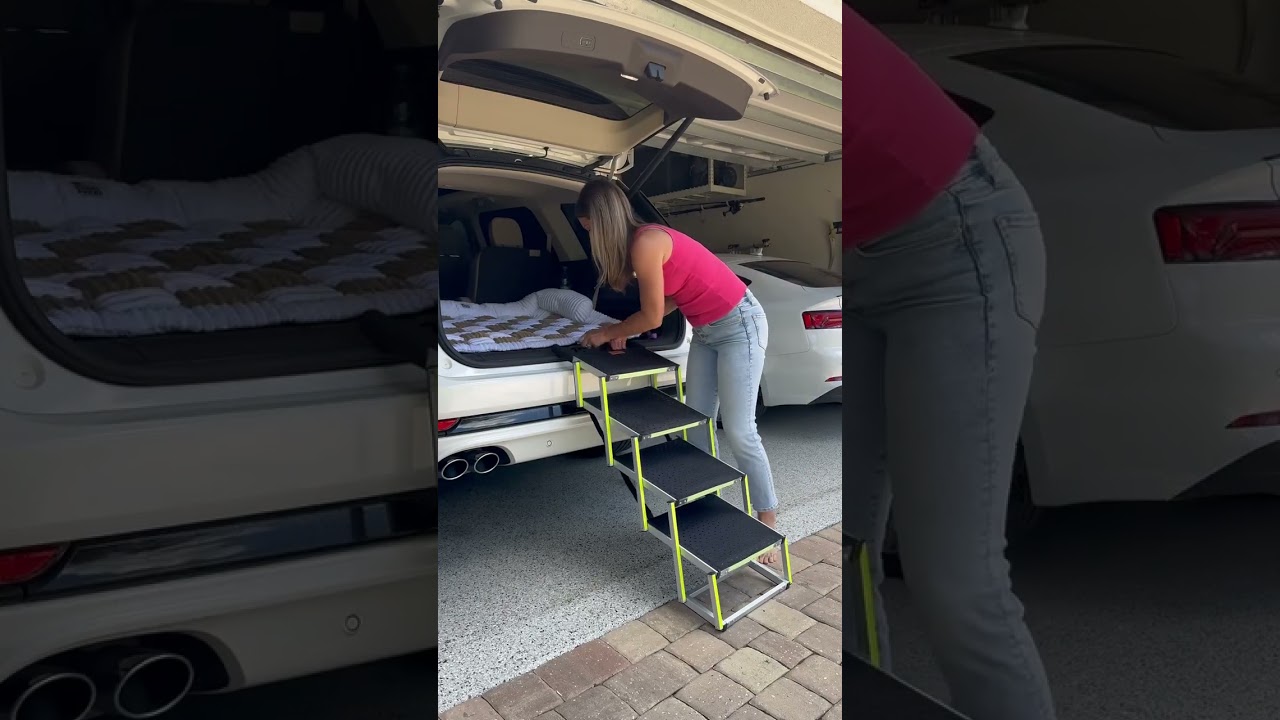
“Great car ramp!!!! It’s compact and easy to store in my sedan’s trunk. The anti-slip surface is excellent for rainy days, ensuring my dogs can climb safely!!!!”
How to use the dog ramp
FAQ
How do I build a simple ramp for my dog?
Start with a sturdy board cut to a length that creates a comfortable slope, then add underside support and a securely attached non-slip walking surface. Sand the edges, set both ends on stable surfaces, and test the ramp for movement before guiding your dog across it.
What angle should a ramp be for a dog?
A gentle slope is easier to use than a steep one, so make the ramp as long as your available space safely allows. If your dog struggles, lengthen the ramp or reduce the height rather than asking them to climb at an angle they find difficult.

Leave a comment