
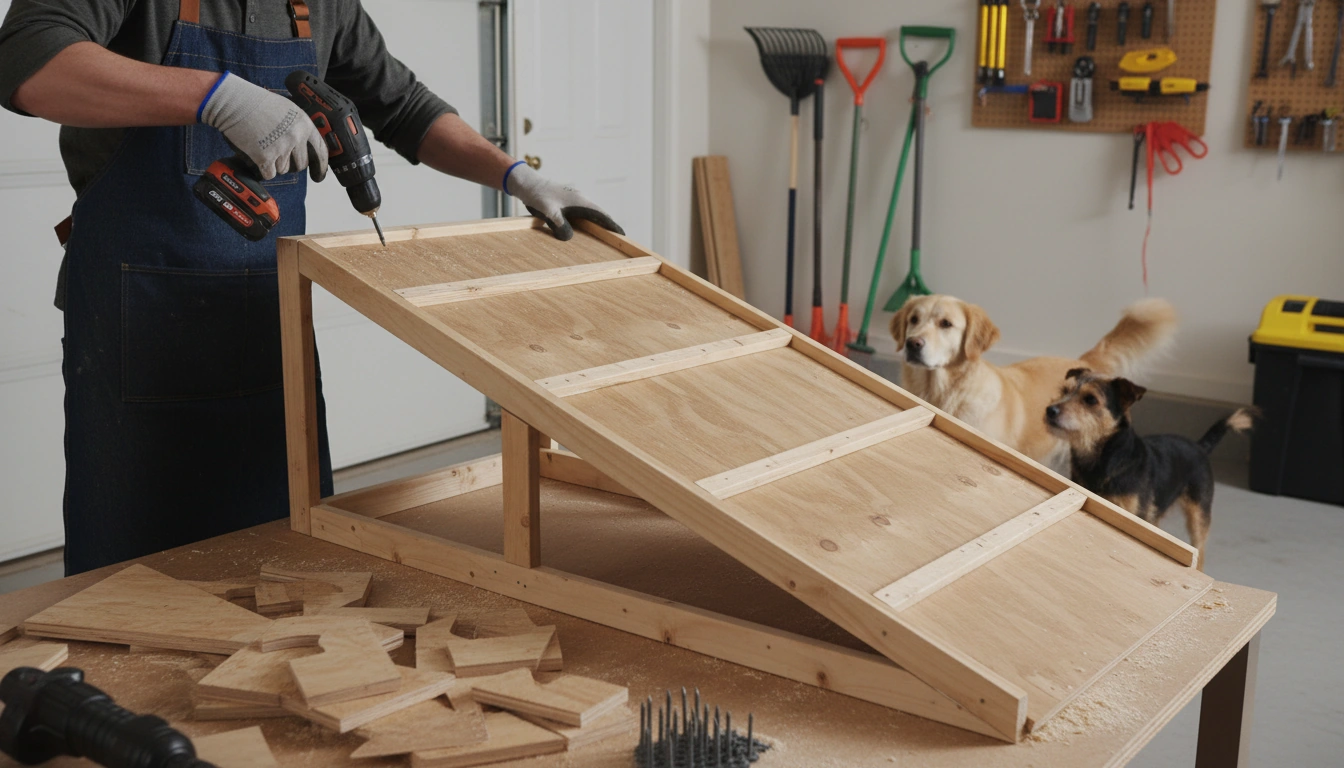
How to Make a Dog Ramp With Plywood
To make a dog ramp with plywood, start with a sturdy sheet of 3/4-inch plywood, cut it to the length and width your dog and vehicle need, then add support bracing and a non-slip walking surface. For SUV or truck loading, measure from the ground to the tailgate first so the ramp is long enough to create a gentle incline.
Measure the Height and Choose the Ramp Length
Measure the vertical height from the ground to the surface your dog will step onto, such as a tailgate, cargo floor, porch, or couch. For many vehicles, a ramp between 5 and 7 feet long is more comfortable than a short, steep board.
A good practical target is a low-to-moderate incline, especially for senior dogs, puppies, or dogs with joint concerns. You can compare ramp angle and vehicle-loading tips in the Owleys guide to tailgate car dog ramps for safer SUV and truck loading.
How to use the dog ramp
Cut the Plywood and Add Side Supports
Use 3/4-inch plywood for better strength and less flex under your dog’s weight. A common DIY size is about 16 to 20 inches wide, but large breeds may need extra width so they can walk without hesitation.
Cut two 1×3 or 2×4 boards to match the ramp length and screw them underneath the long edges as support rails. Pre-drill the holes to prevent splitting, and use exterior-grade screws if the ramp may be used outside.
Create a Non-Slip Walking Surface
Bare plywood can be slippery, especially when wet or dusty, so add traction before your dog uses the ramp. Outdoor carpet, rubber matting, marine carpet, or adhesive anti-slip strips can all work well.
Wrap carpet slightly over the edges and staple it underneath, or screw rubber matting down with washers so it does not peel up. Add thin wooden cleats every 8 to 12 inches if your dog needs extra grip on a steeper ramp.
Secure the Top and Bottom of the Ramp
The top of the plywood ramp should not slide off the vehicle or platform while your dog is walking. Attach a rubber edge, metal hook, or small lip board at the top to help it stay in place against the tailgate or cargo area.
Add rubber feet, grip tape, or a textured pad to the bottom end to reduce movement on pavement, garage floors, or tile. Before each use, press down on the ramp and shift it slightly to confirm it is stable.
Test the Ramp Before Full Use
Test the plywood ramp with light pressure first, then with gradually increasing weight before letting your dog climb it. If the ramp flexes, add another center support board underneath or shorten the span.
Introduce your dog slowly with treats, a leash, and a calm pace. Keep the first sessions flat or very low, then raise the ramp once your dog understands how to walk up and down safely.
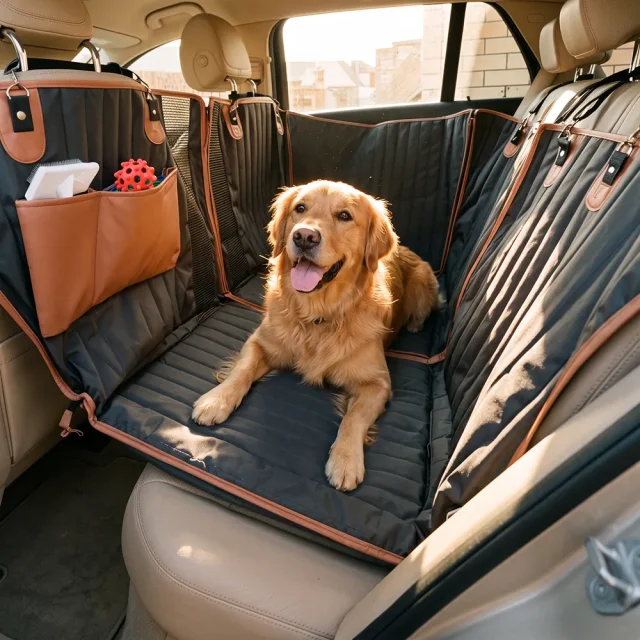
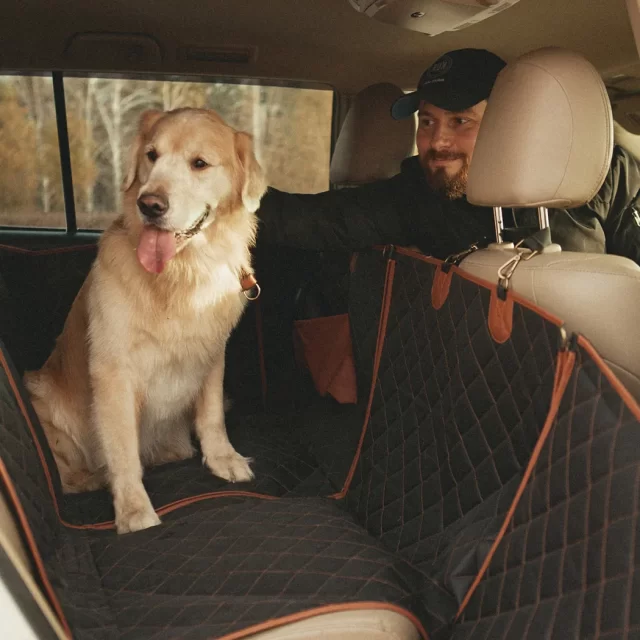
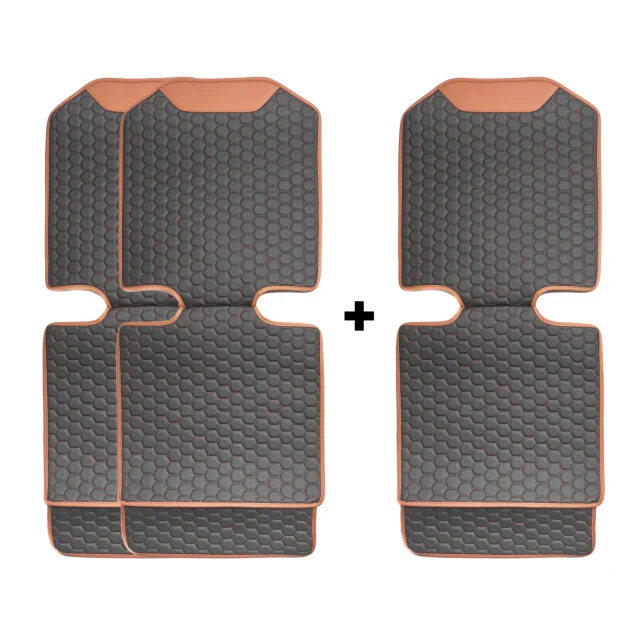
The Travel Buddy Mk. II Dog Hammock keeps the back seat covered, so shed dog fur lands on a washable surface instead of the car upholstery; it pairs with the ramp during the same trip.
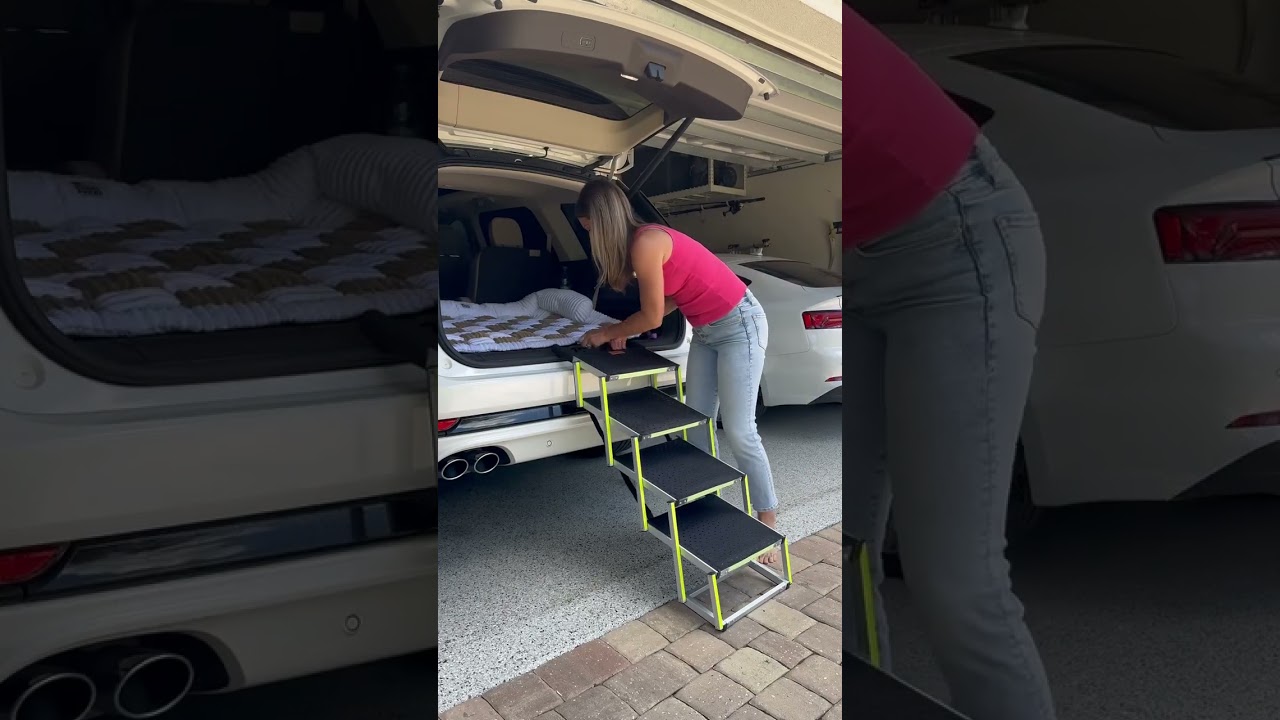
“Works well with my ford explorer, not so much with my compact car. It’s a bit too bulky for smaller vehicles but great for larger ones. My dog feels secure using this car dog ramp, and I appreciate the adjustable features 👏👏”
FAQ
How to make a dog ramp out of plywood?
To make a dog ramp out of plywood, cut a 3/4-inch plywood board to the needed length, reinforce the underside with wood rails, and cover the top with carpet or rubber for traction. Secure the top edge so it cannot slide, and test the ramp for flex before your dog uses it.
What is the best material to use for a dog ramp?
The best material to use for a dog ramp depends on where it will be used, but plywood is a strong DIY choice when paired with support boards and a non-slip covering. For the walking surface, rubber matting, outdoor carpet, or textured traction strips are better than bare wood.

Leave a comment