
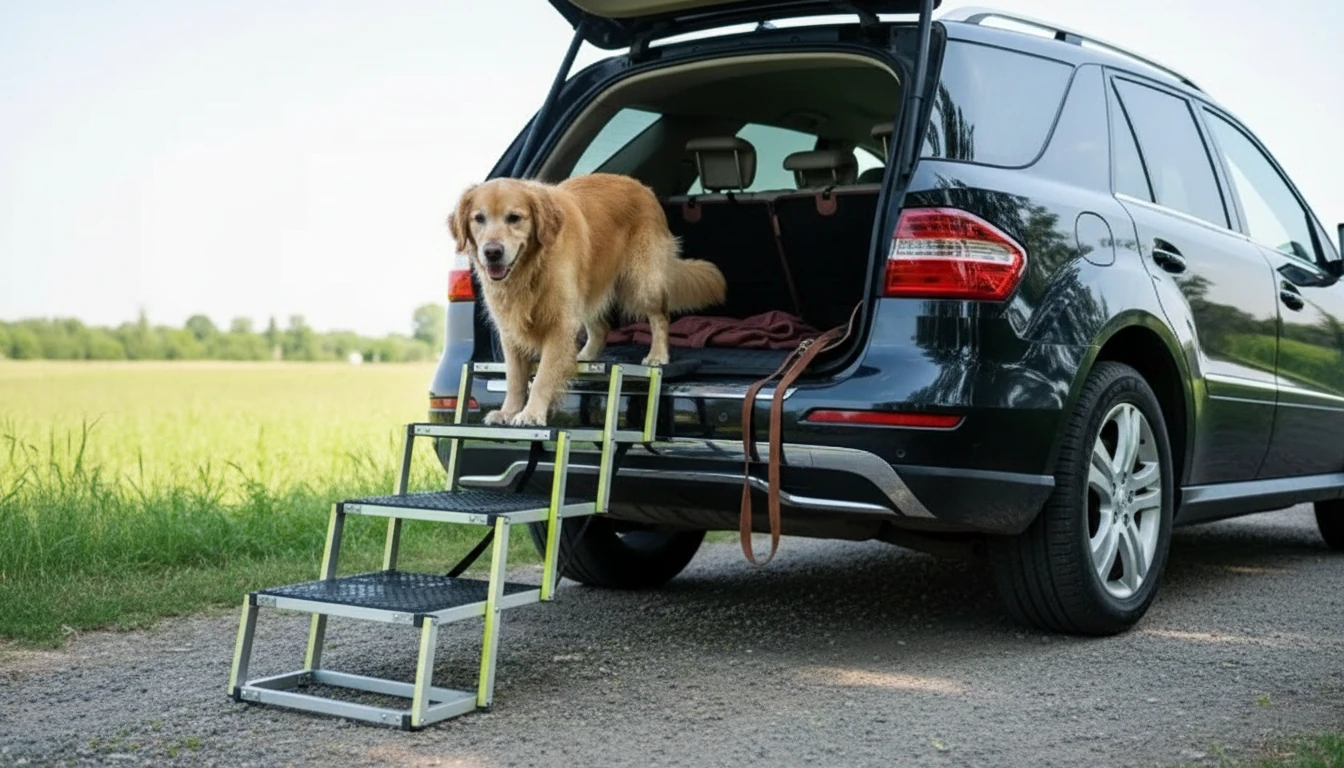
How to make a makeshift ramp for dogs?
A makeshift dog ramp can help your dog get into an SUV, truck, or onto a low platform when you do not have a permanent ramp available. Use it only as a temporary solution, and make sure it is wide, stable, and covered with a non-slip surface before your dog steps on it.
Choose a Strong, Flat Base
Start with a sturdy board, such as 3/4-inch plywood or a solid plank that is at least 12 to 16 inches wide for small dogs and 18 to 24 inches wide for medium or large dogs. The board should be long enough to create a gentle incline, ideally 4 to 6 feet for most vehicle loading situations. Check that the board does not flex under your dog’s weight. If it bends, cracks, or shifts when you press down on it, use a thicker board or add support underneath before allowing your dog to use it.
Add a Non-Slip Walking Surface
Cover the top of the ramp with outdoor carpet, rubber matting, yoga mat material, or adhesive grip tape. Secure the material with screws, staples, or heavy-duty adhesive so it cannot bunch up or slide while your dog is walking. For extra traction, add thin wooden slats across the ramp every 8 to 12 inches.
Secure the Ramp at Both Ends
Place the upper end of the ramp on a flat, stable surface, such as the vehicle cargo floor or tailgate edge. Use clamps, a towel for friction, or rubber pads to reduce movement, and never balance the ramp on a rounded bumper or unstable lip. The bottom end should rest fully on the ground without wobbling.
Keep the Incline Gentle
A lower angle is easier on your dog’s joints and reduces the chance of slipping. If the ramp feels too steep, move the vehicle closer to a curb, use a longer board, or load from a lower entry point. As a quick check, your dog should be able to walk up without jumping, scrambling, or lowering their body in fear. Senior dogs, puppies, and dogs with joint issues need an especially gradual slope.
Train Your Dog Before Vehicle Use
Lay the ramp flat on the ground first and reward your dog for walking across it slowly. Once your dog is comfortable, raise one end slightly, then gradually increase the height. Use a leash for guidance, not pulling, and keep treats near the top to encourage forward movement. For regular SUV or truck loading, a purpose-built ramp is safer than a temporary setup; see this guide to tailgate car dog ramps for safer SUV and truck loading .
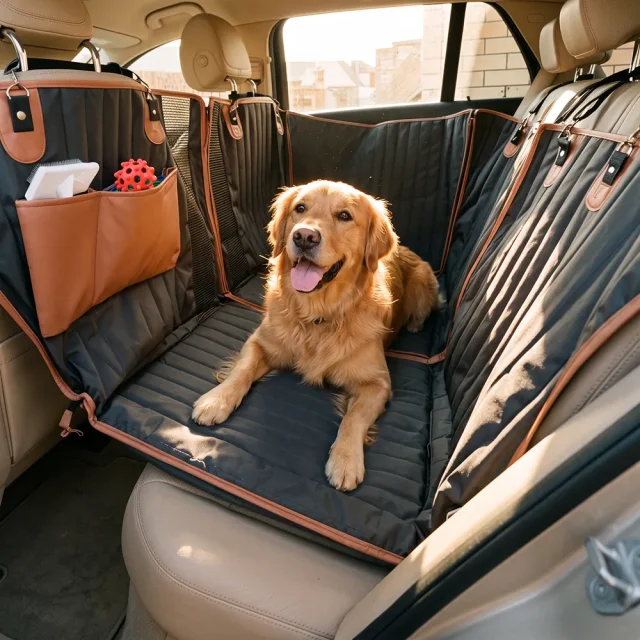
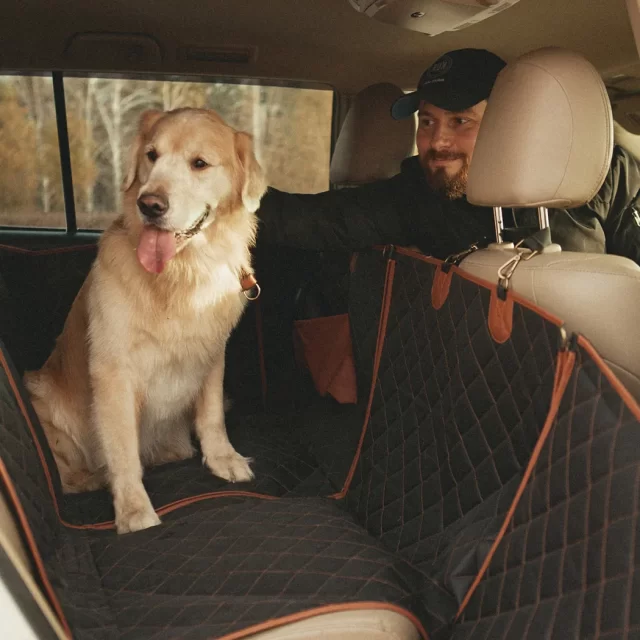
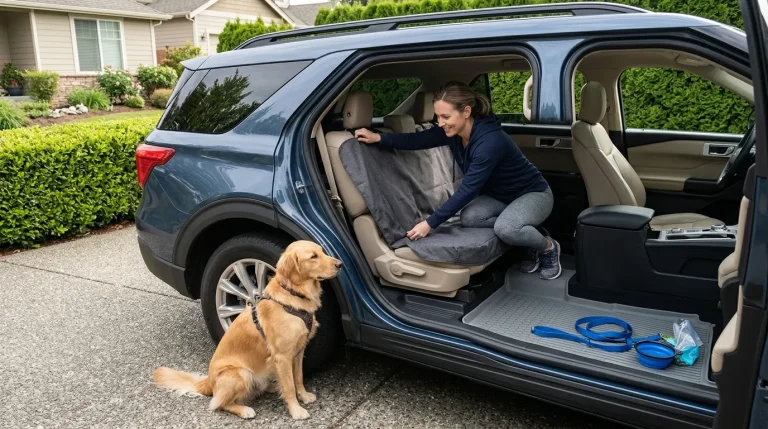
The Travel Buddy Mk. II Dog Hammock works alongside the ramp; it keeps the back seat covered, so shed dog fur lands on a washable surface instead of the car upholstery.
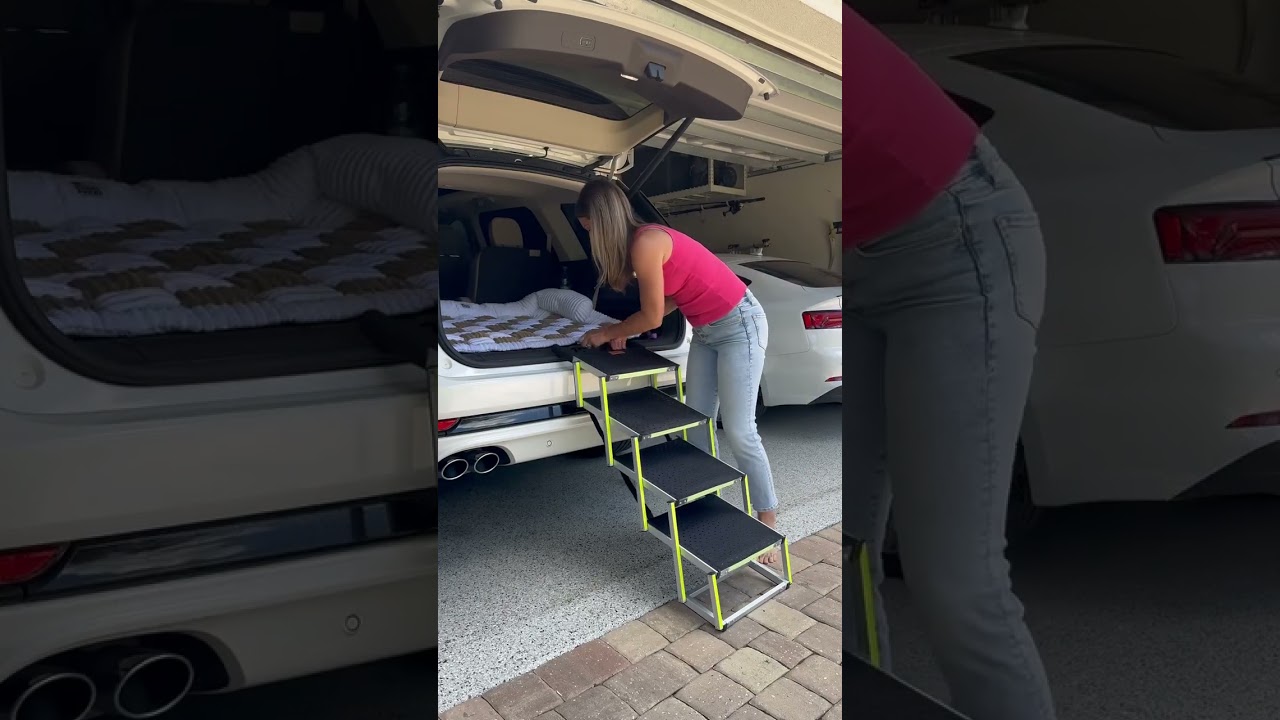
“Works well with my ford explorer, not so much with my compact car. It’s a bit too bulky for smaller vehicles but great for larger ones. My dog feels secure using this car dog ramp, and I appreciate the adjustable features 👏👏”
How to use the dog ramp
For the full product context, see the main Owleys guide.
FAQ
What is the best material for a dog ramp?
The best material for a dog ramp is a strong, rigid base such as plywood, aluminum, or reinforced plastic with a non-slip surface on top. For a makeshift dog ramp, 3/4-inch plywood covered with rubber matting or outdoor carpet is a practical temporary option.
Do dogs prefer steps or ramps?
Many dogs prefer ramps when getting into vehicles because ramps create a smoother path and reduce jumping. Dogs with short legs, arthritis, back issues, or limited mobility usually do better with ramps than steps.

Leave a comment