
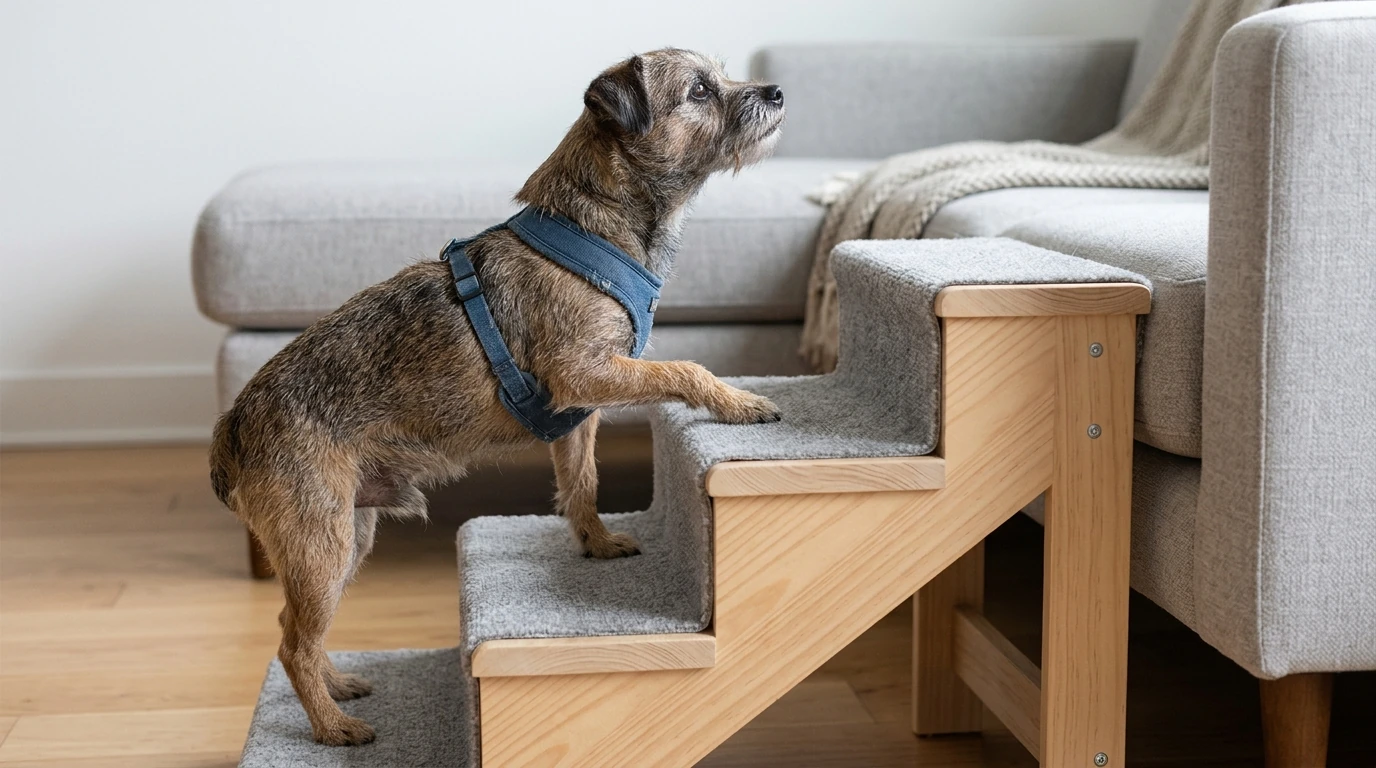
What can you use instead of a dog ramp?
You can use pet stairs, a portable step stool, a low platform, a lifting harness, or a carefully built DIY incline instead of a dog ramp. The safest choice depends on your dog’s size, joint health, confidence level, and the height of the vehicle, couch, or bed they need to reach.
For tailgates and SUVs, the alternative must be stable enough for repeated loading and unloading. If you regularly travel with your dog, compare these options with a purpose-built ramp in the Owleys guide to safer SUV and truck loading with a dog ramp.
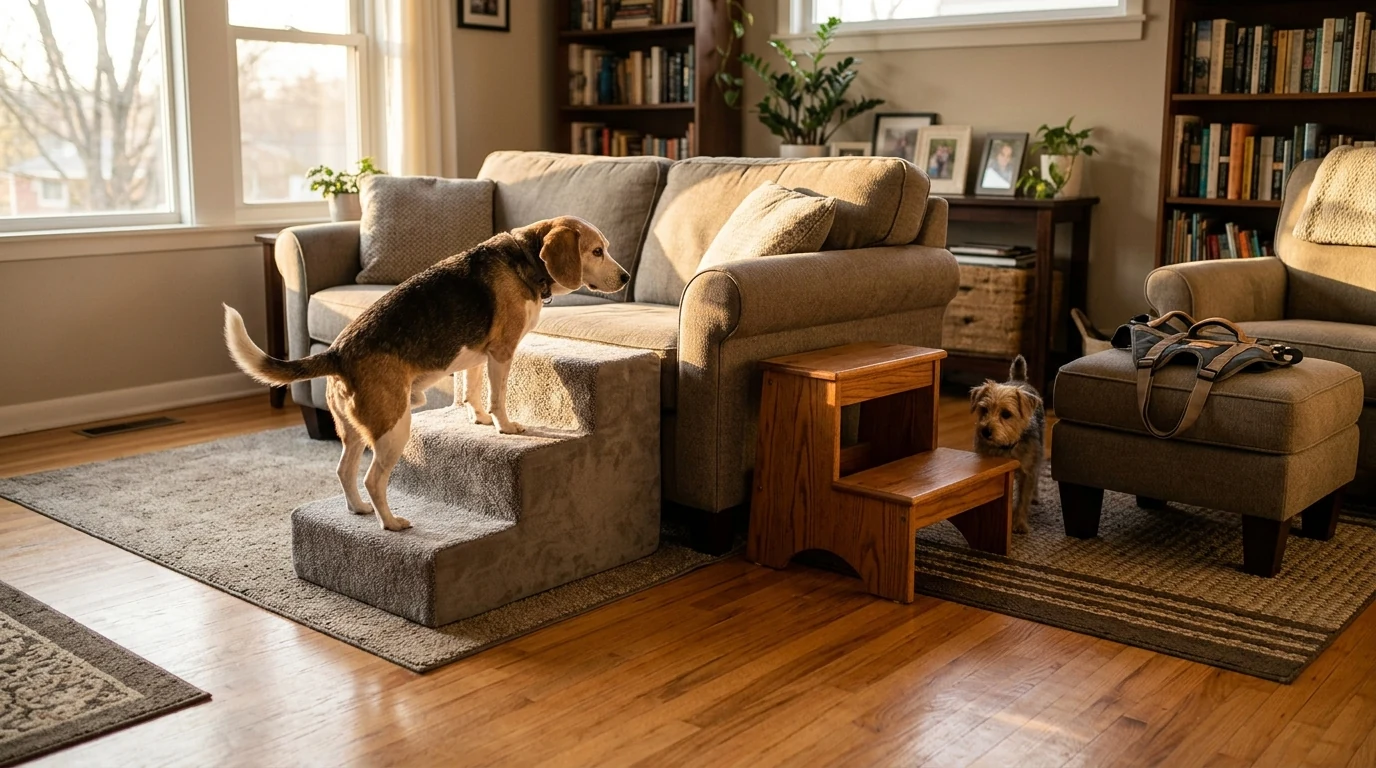
Use pet stairs for low, predictable heights
Pet stairs can work well for couches, beds, and some low vehicle doors when your dog can bend their knees and hips comfortably. Choose steps with a non-slip surface, a wide tread, and a height your dog can climb without jumping between levels.
As a practical check, measure from the floor to the target surface and compare it with the total stair height before buying. If your dog hesitates, place treats on each step and practice indoors before using stairs near a car.
Try a sturdy step stool or platform
A wide step stool can reduce the height your dog has to jump, especially for medium dogs getting into a low cargo area. Look for rubber feet, a textured top, and a weight rating above your dog’s body weight.
Set the stool on flat ground and press down on each corner before letting your dog use it. For vehicles, make sure the stool does not slide on pavement, gravel, or wet garage flooring.
Support your dog with a lifting harness
A lifting harness is useful when your dog needs help with only part of the movement, such as placing front paws into the cargo area while you support the rear. It is often a better option than lifting under the belly because it spreads pressure more evenly.
Choose a harness with padded handles and adjust it so it sits snugly without rubbing the armpits. Use slow, coordinated movement, and avoid twisting your dog’s spine while guiding them upward.
Build a temporary ramp with safe materials
A makeshift ramp can be made from a strong board, carpet, and secure backing, but it should only be used if it does not flex or shift. A board that is at least 12 inches wide is easier for many small and medium dogs to trust.
Add carpet, rubber matting, or traction tape to the walking surface, then secure the top so it cannot slip off the tailgate or couch. Test the ramp with firm hand pressure before allowing your dog to walk on it.
Avoid unsafe substitutes
Do not use loose cushions, stacked boxes, folding chairs, or slick boards as dog ramp alternatives. These items can slide, collapse, or create uneven footing that encourages a sudden jump.
If your dog has arthritis, back pain, recent surgery, or visible hesitation, ask your veterinarian whether a ramp, stairs, or assisted lifting is safer. For frequent SUV or truck loading, a stable ramp usually offers the most controlled path.
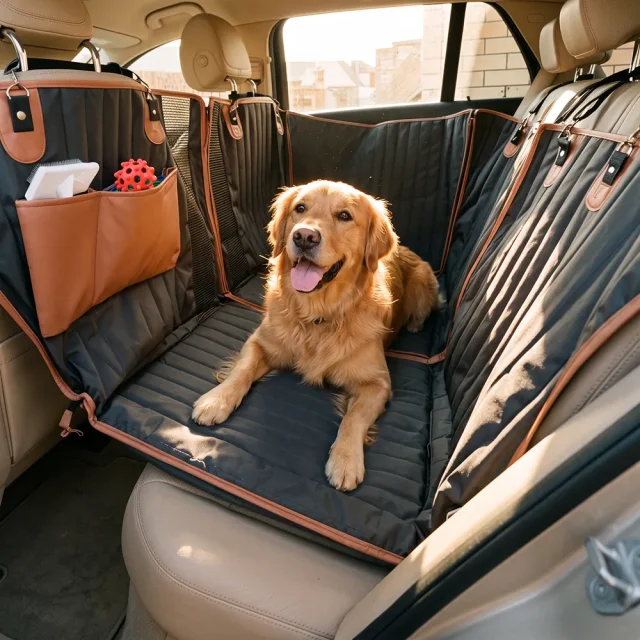
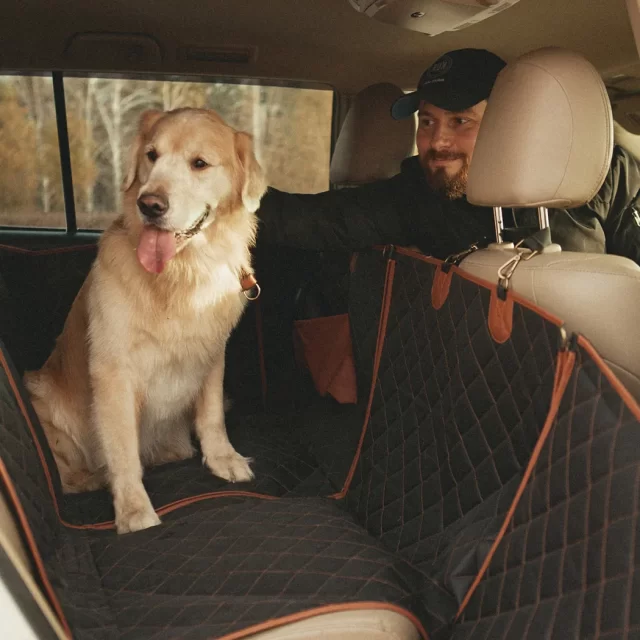
The Travel Buddy Mk. II Dog Hammock works alongside the ramp; it keeps the back seat covered, so shed dog fur lands on a washable surface instead of the car upholstery.
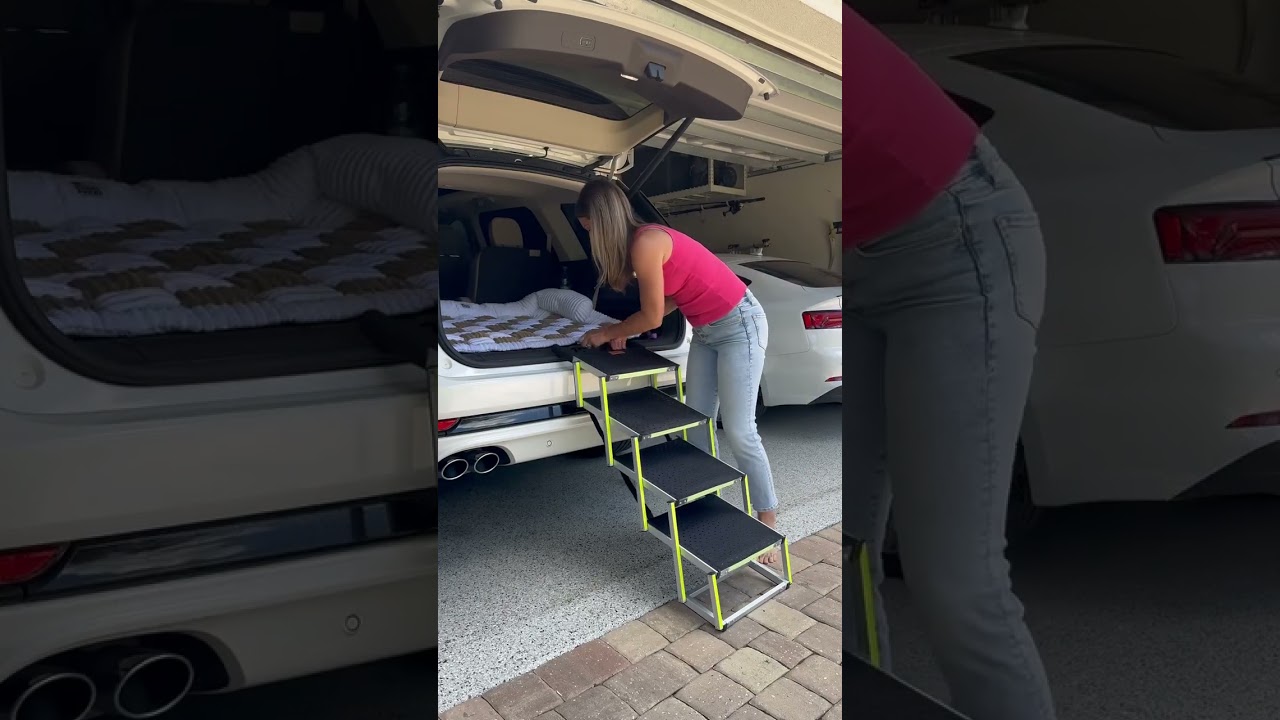
“Works well with my ford explorer, not so much with my compact car. It’s a bit too bulky for smaller vehicles but great for larger ones. My dog feels secure using this car dog ramp, and I appreciate the adjustable features 👏👏”
How to use the ramp
FAQ
How can I make a makeshift ramp for my dog?
You can make a makeshift ramp for your dog with a strong board covered in carpet, rubber matting, or traction tape. Secure the top and bottom so the ramp cannot slide, and test it with pressure before your dog steps on it.
How can I make a DIY dog ramp for my couch?
You can make a DIY dog ramp for your couch with a plywood board, carpet or rubber grip material, and a stable support at the couch end. Keep the incline gentle and make sure the ramp is wide enough for your dog to turn and walk comfortably.

Leave a comment