
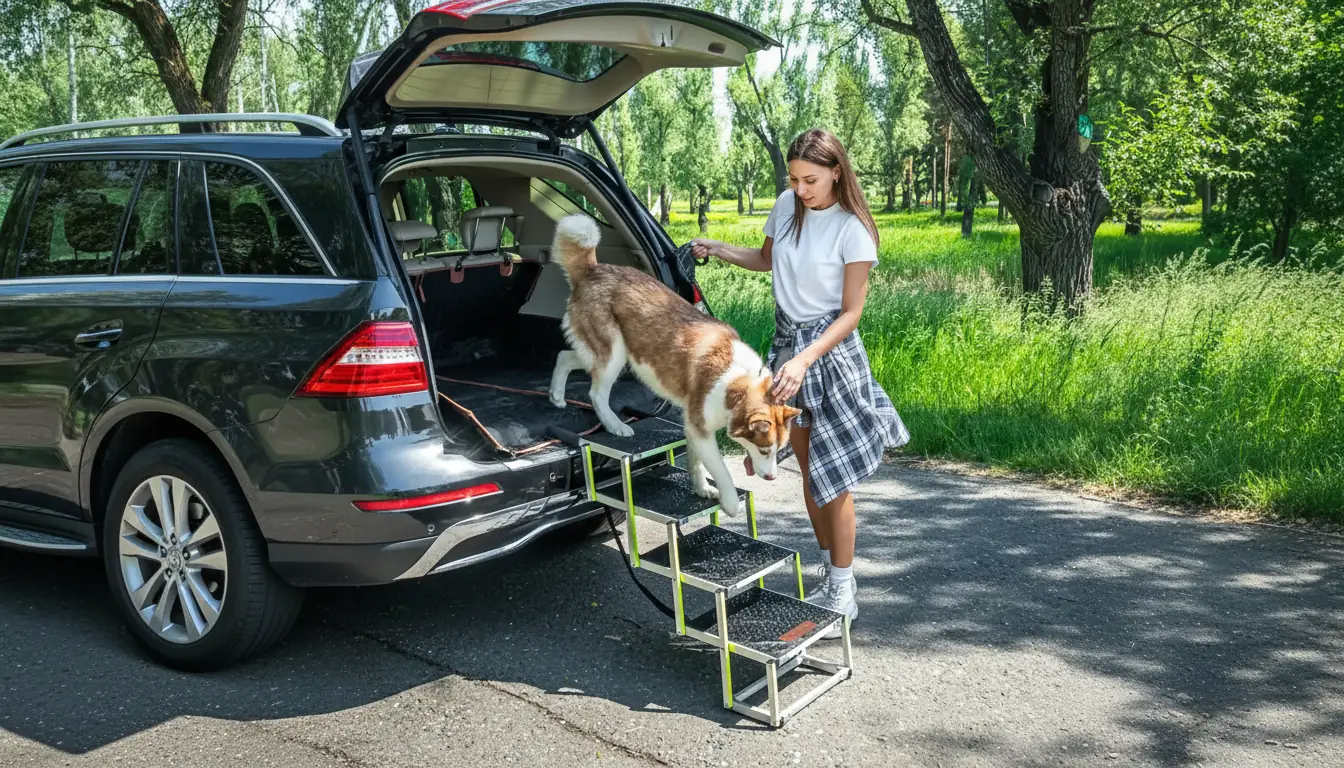
What Is a Good Slope for a Dog Ramp?
A good slope for a dog ramp is usually between 10 and 18 degrees, depending on your dog’s size, strength, age, and confidence. For most dogs loading into an SUV or truck, a gentler slope near 10 to 15 degrees is easier on joints and safer for repeated use.
If your dog is senior, recovering from an injury, or hesitant on ramps, choose the longest ramp that fits your vehicle and storage space. A longer ramp lowers the angle and gives your dog more time to place each paw securely.
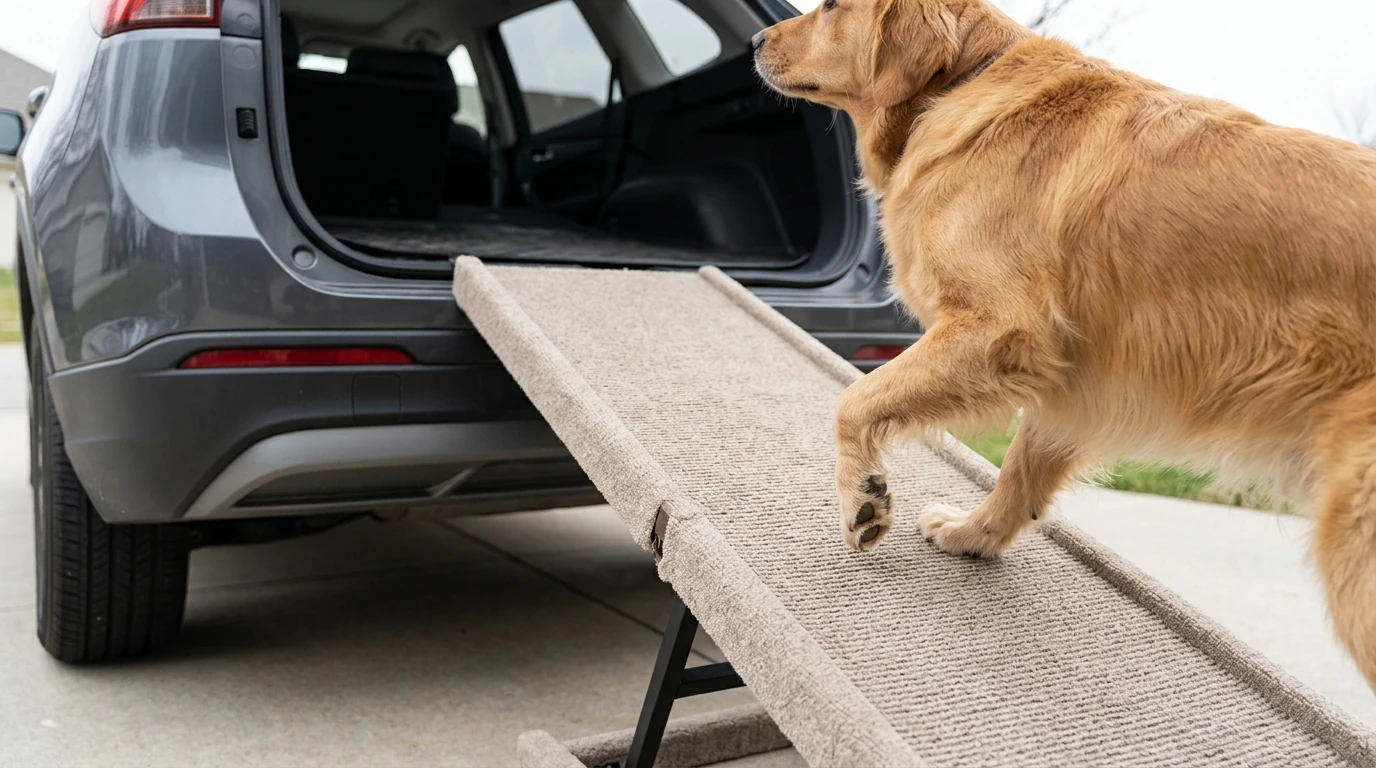
Recommended Ramp Angles by Dog Type
For small dogs, senior dogs, and dogs with mobility issues, aim for about 10 to 12 degrees whenever possible. This is a comfortable range for short legs, sensitive joints, and dogs that need a slower climb.
Healthy adult dogs can often handle 15 to 18 degrees, especially if the ramp has a high-traction walking surface. Before regular use, guide your dog up and down with a leash and reward each calm step.
How to Measure the Right Ramp Length
To estimate ramp length, measure the rise from the ground to your vehicle’s cargo floor, tailgate, or seat edge. A 24-inch rise generally needs a ramp around 8 to 11 feet long for a comfortable 10 to 15 degree slope.
If your ramp is shorter, the slope becomes steeper and may feel unsafe for nervous dogs. Check your vehicle height first, then compare it with the ramp’s full extended length before buying.
How to use the dog ramp
Why Surface Grip Matters as Much as Slope
Even a gentle dog ramp can feel risky if the surface is slick. Look for a textured, non-slip walking surface, raised side edges, and a stable base that does not shift on pavement or a tailgate.
For SUVs and trucks, confirm that the ramp has secure contact points for the loading area. Wipe mud, snow, or loose debris from the ramp before each use to help prevent paw slips.
Choosing a Ramp for SUVs and Trucks
SUVs and trucks often need a longer ramp because their cargo floors sit higher than sedans. A ramp that works well for a low hatchback may be too steep for a lifted truck or tall SUV.
For more help comparing ramp length, vehicle height, and safe loading setup, read the full Owleys guide to tailgate car dog ramps for safer SUV and truck loading. Always check the ramp’s weight capacity and folded size so it matches both your dog and your storage area.
Training Your Dog to Use the Ramp Safely
Start with the ramp flat on the ground so your dog can walk across it without height or pressure. Use treats, a calm voice, and short sessions to build familiarity before attaching it to your vehicle.
Once the ramp is in place, keep your dog on a leash and walk beside them slowly. Do not let your dog jump off halfway, and avoid forcing a nervous dog up a steep angle.
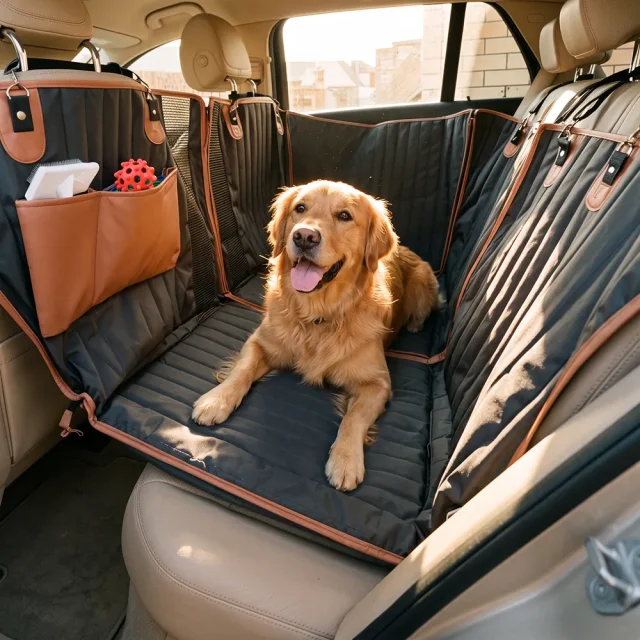
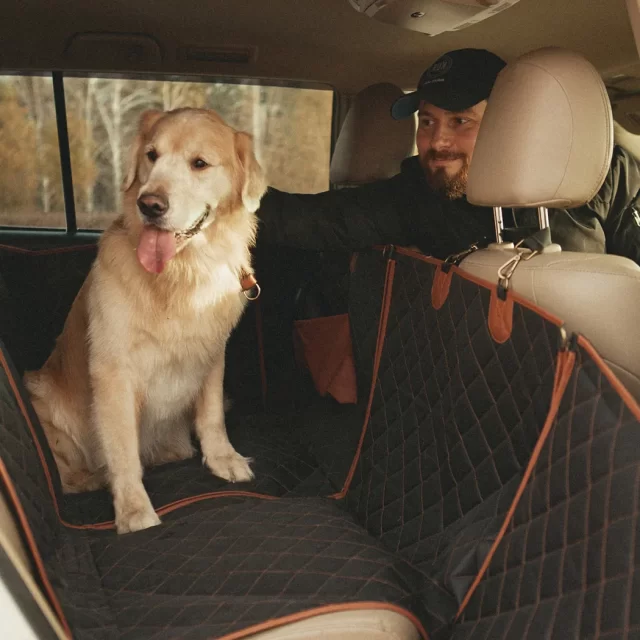
The Travel Buddy Mk. II Dog Hammock keeps the back seat covered, so shed dog fur lands on a washable surface instead of the car upholstery, pairing with the ramp during everyday use.
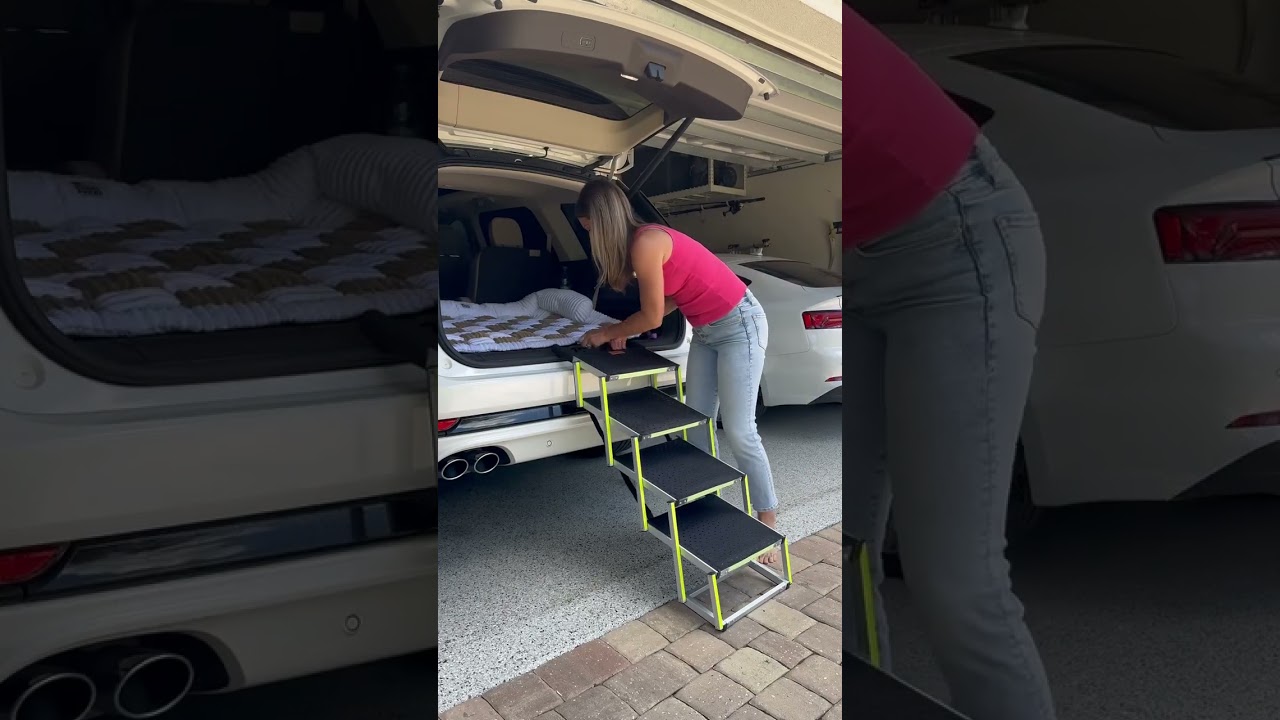
“Works well with my ford explorer, not so much with my compact car. It’s a bit too bulky for smaller vehicles but great for larger ones. My dog feels secure using this car dog ramp, and I appreciate the adjustable features 👏👏”
FAQ
What angle should a dog ramp be at?
A dog ramp should usually be at a 10 to 18 degree angle. For senior dogs, small dogs, or dogs with joint concerns, a 10 to 12 degree angle is the safer and more comfortable target.
Is a 10 degree ramp too steep?
A 10 degree ramp is not too steep for most dogs. In fact, a 10 degree ramp is considered gentle and is often a good choice for older dogs, small breeds, and dogs that need extra joint support.

Leave a comment