
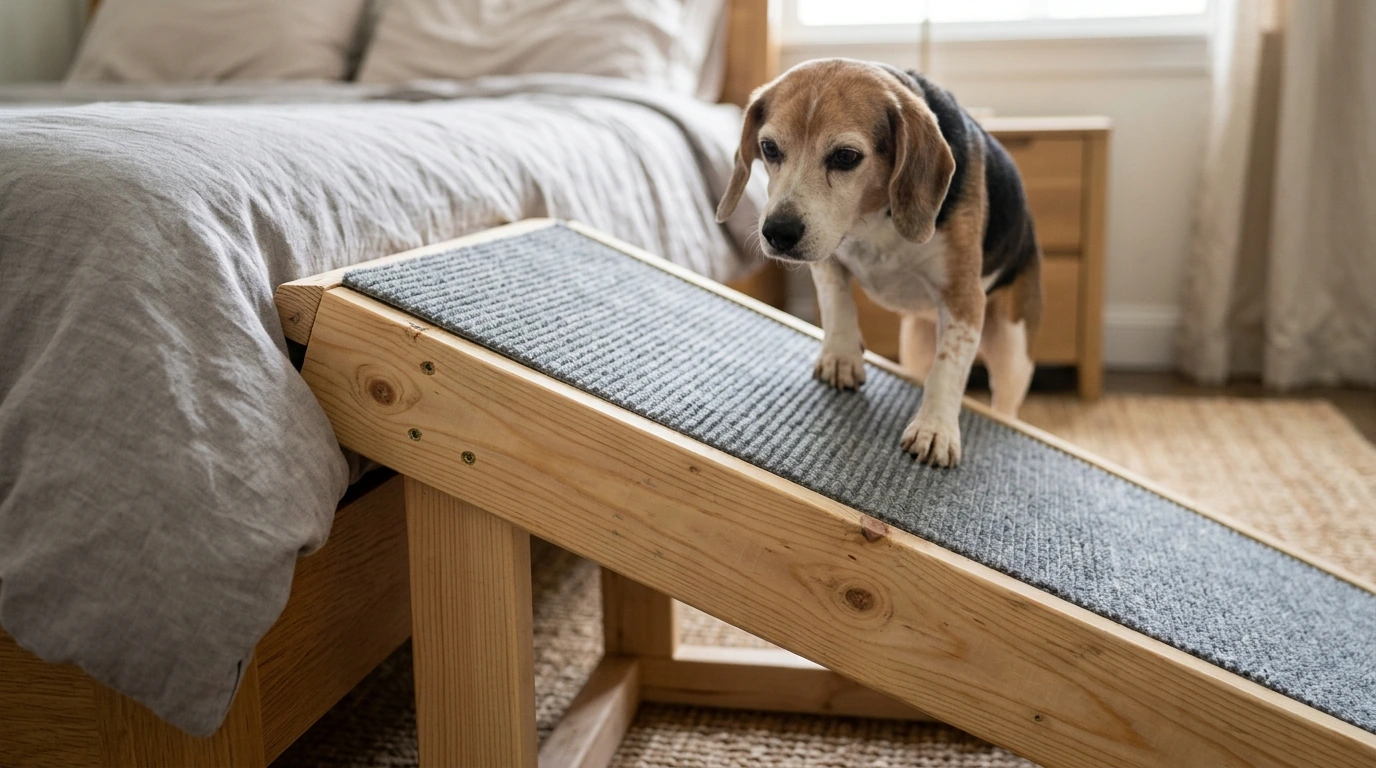
DIY Dog Ramp for Bed: What You Need
A do-it-yourself dog ramp for a bed can be a practical project if your dog struggles to jump up or down safely. Use a sturdy plywood board, wood strips for side rails, carpet or rubber matting for traction, screws, wood glue, sandpaper, and non-slip pads for the floor contact points.
Measure from the floor to the top of the mattress before cutting materials. For many beds, a ramp between 48 and 72 inches long is easier for small, senior, or recovering dogs than a short, steep board.
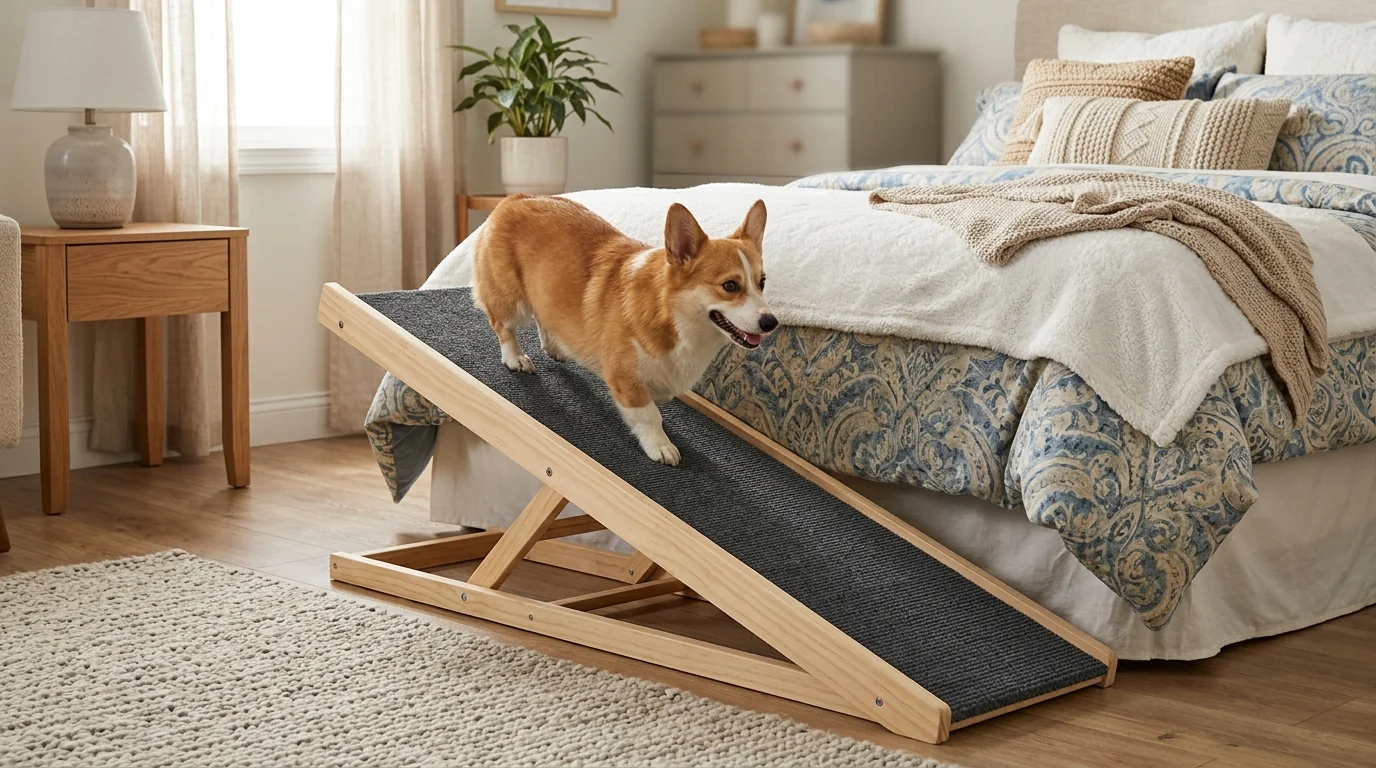
Choose a Safe Ramp Angle
The ramp angle matters because a steep incline can make climbing harder and increase slipping. As a practical target, keep the slope around 18 to 25 degrees for most household bed ramps, and go gentler if your dog has joint issues.
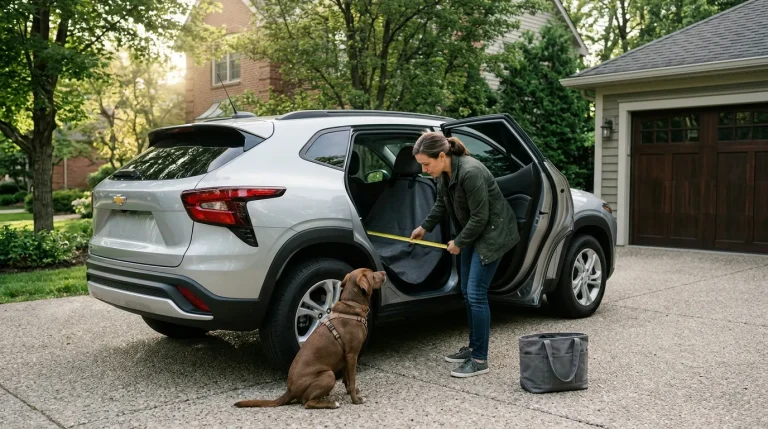
To check the fit, place a tape measure from the floor to the mattress height, then test different ramp lengths before cutting. If the ramp feels steep when you walk your hand up it, choose a longer board.
Build the Ramp Base
Cut a plywood panel wide enough for your dog to walk comfortably, usually 14 to 18 inches for small dogs and 20 inches or more for larger dogs. Sand all edges until smooth so paws, nails, and bedding will not catch on splinters.
Attach wood strips along both sides as low guard rails. Secure them with wood glue and screws, then check that no screw tips protrude through the walking surface.
Add Traction and Stability
Cover the walking surface with low-pile carpet, ribbed rubber, or adhesive stair tread material. Staple or glue the traction layer tightly so it does not wrinkle, shift, or create a tripping point.
Add rubber feet or non-slip pads to the bottom end of the ramp. If the top rests against a bed frame, use a small lip, bracket, or anti-slip backing to keep the ramp from sliding when your dog steps onto it.
Test Before Daily Use
Before letting your dog use the ramp freely, press down along the full length to check for flexing. A ramp for a heavier dog may need underside support beams or thicker plywood, such as 3/4-inch material.
Introduce the ramp slowly with treats and leash guidance. For vehicle-loading safety ideas and ramp considerations beyond the bedroom, see this guide to tailgate car dog ramps for safer SUV and truck loading.
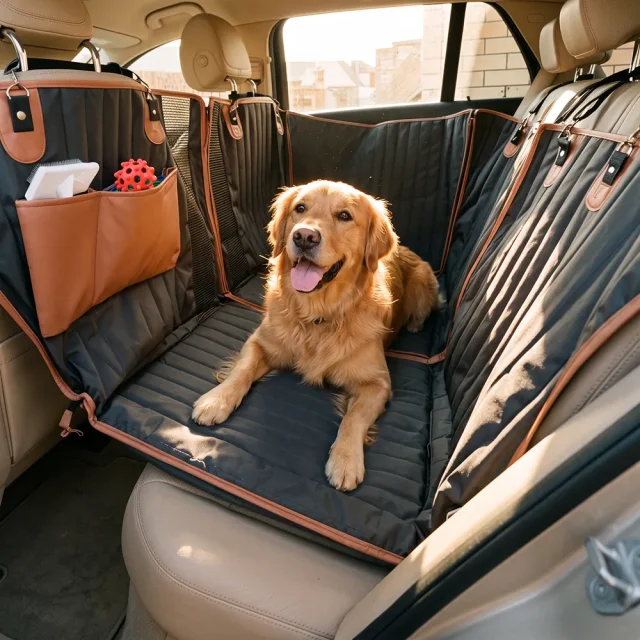
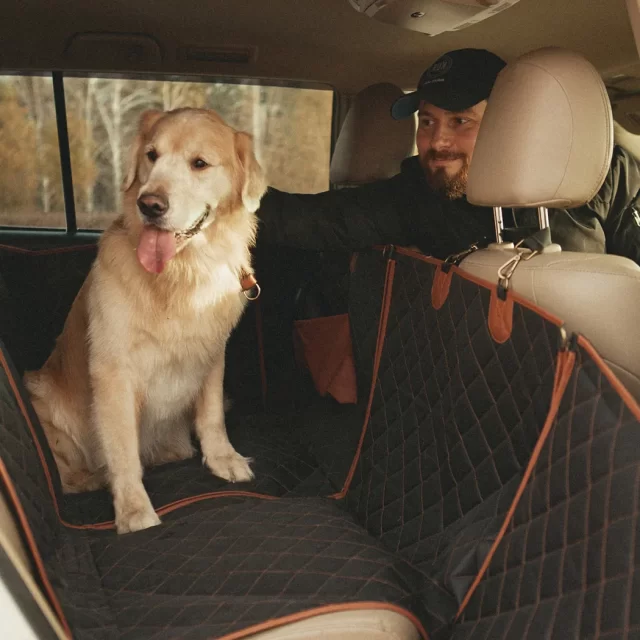
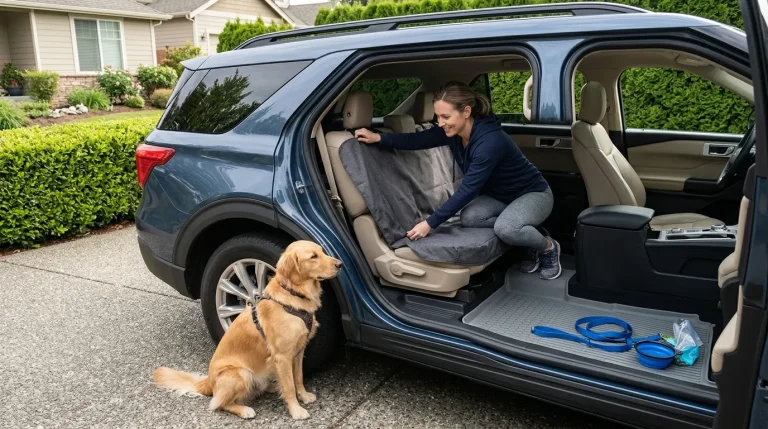
The Travel Buddy Mk. II Dog Hammock works alongside the ramp and keeps the back seat covered, so shed dog fur lands on a washable surface instead of the car upholstery.
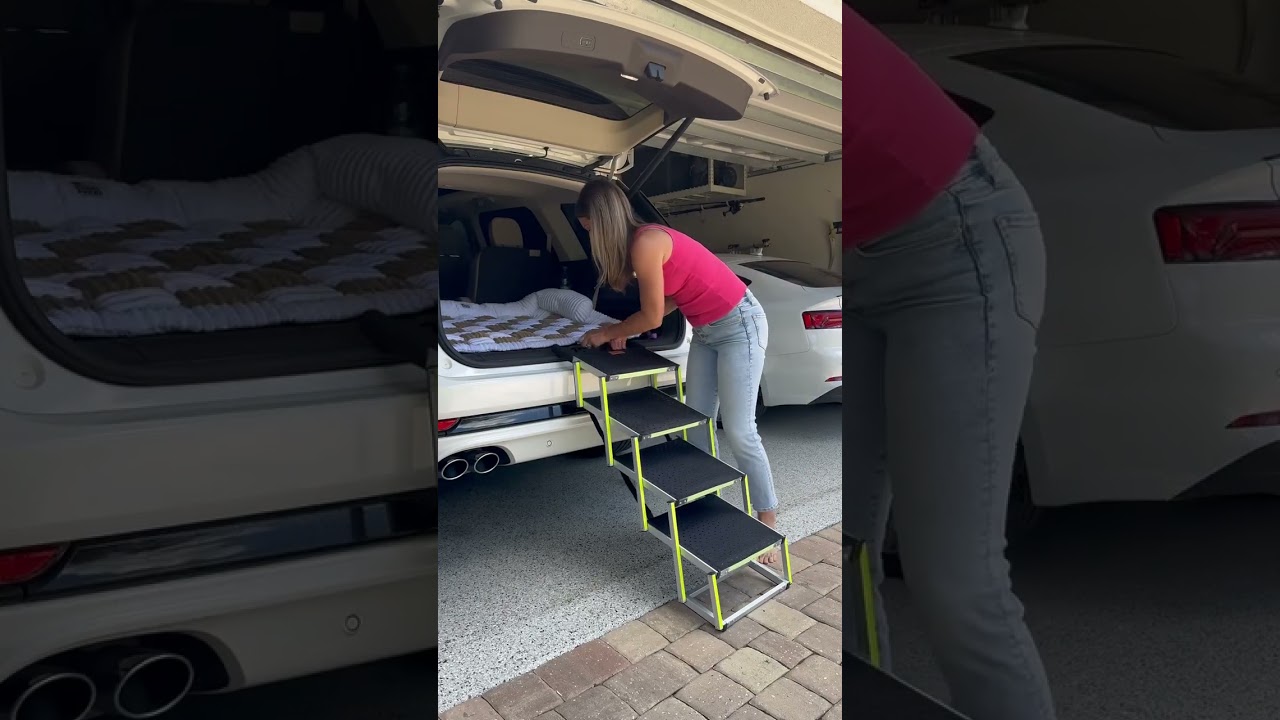
“Works well with my ford explorer, not so much with my compact car. It’s a bit too bulky for smaller vehicles but great for larger ones. My dog feels secure using this car dog ramp, and I appreciate the adjustable features 👏👏”
How to use the dog ramp
FAQ
What can I use as a dog ramp?
You can use plywood, a sturdy board, carpeted panels, rubber matting, or a purpose-built pet ramp as a dog ramp. The dog ramp should be wide, stable, and covered with a non-slip surface so your dog can climb without sliding.
How to make a dog ramp with plywood?
To make a dog ramp with plywood, cut a sturdy panel to the right length and width, sand the edges, add side rails, and cover the surface with carpet or rubber tread. A plywood dog ramp should also have non-slip pads or a secure top contact point to prevent shifting.

Leave a comment