
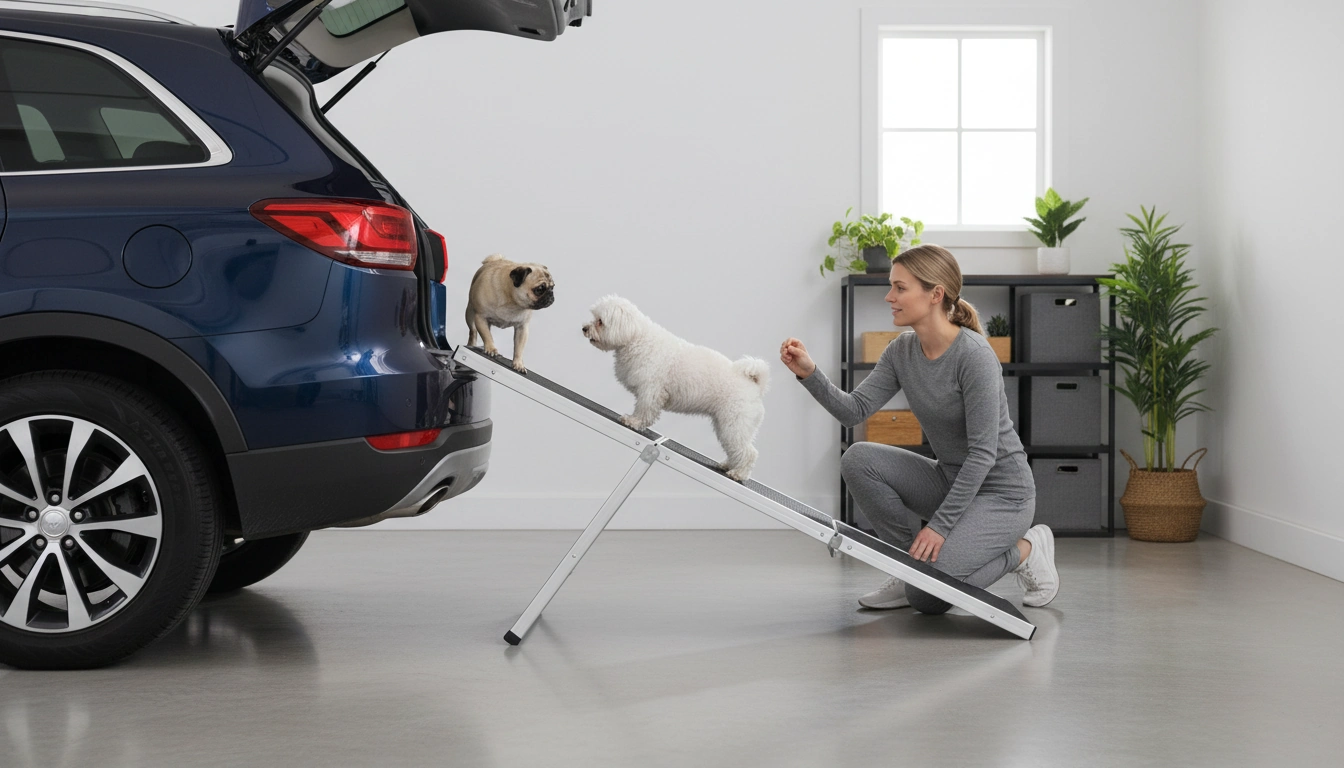
What is the best dog ramp for a small dog?
The best dog ramp for a small dog is a low-angle, non-slip ramp that feels stable under lightweight paws and is easy for you to position. For SUVs, trucks, and tailgates, choose a ramp with a grippy walking surface, raised side edges, and a weight rating well above your dog’s size so it does not flex or wobble during use.
Choose a gentle incline
Small dogs often have short legs, so ramp angle matters more than overall ramp size. For daily use, aim for a gentler incline by choosing a longer ramp or by placing the ramp on a lower loading point when possible.
As a practical check, set the ramp in place and watch whether your dog can walk up without hopping, scrambling, or pausing halfway. If your dog hesitates, lower the entry point or use a longer ramp to reduce the slope.
Look for a secure walking surface
A small dog ramp should have a high-traction surface that works even when paws are wet or the weather is cold. Rubberized, textured, or heavy-duty grip materials are better than slick plastic because they help prevent slipping during the first few steps.
Run your hand across the walking area before buying or using the ramp. It should feel grippy without being abrasive, and it should be easy to wipe clean after dirt, rain, or road dust.
Match the ramp to your vehicle
If the ramp is for a car, SUV, or truck, check the loading height, tailgate shape, and available storage space before choosing one. A ramp that is too short can create a steep climb, while one that is too bulky may be inconvenient to carry every day.
For vehicle loading, a foldable or telescoping ramp is usually the most practical option. For more vehicle-specific tips, see this guide to safer SUV and truck loading with a tailgate car dog ramp.
Prioritize stability and weight rating
Even a small dog needs a ramp that feels solid. A higher weight capacity is useful because it usually means stronger materials, less bending, and better stability when the dog steps onto the ramp.
Before each use, place the ramp on a flat, secure surface and make sure the top contact point cannot slide off the vehicle or furniture. If the ramp shifts when you press down with your hand, reposition it before letting your dog climb.
Train your small dog gradually
The right ramp still needs a calm introduction. Start with the ramp flat on the ground, reward your dog for walking across it, then slowly increase the incline over several short sessions.
Use treats, a leash for guidance, and steady praise, but avoid pulling your dog up the ramp. A small dog that learns the ramp at a comfortable pace is more likely to use it confidently every day.
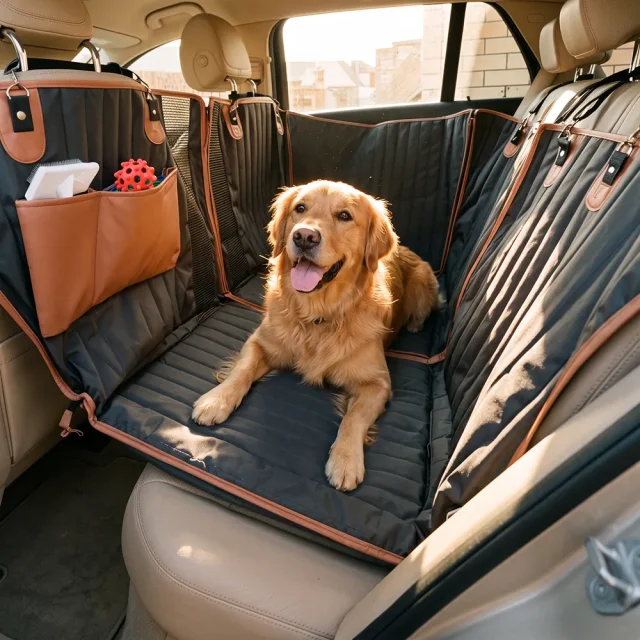
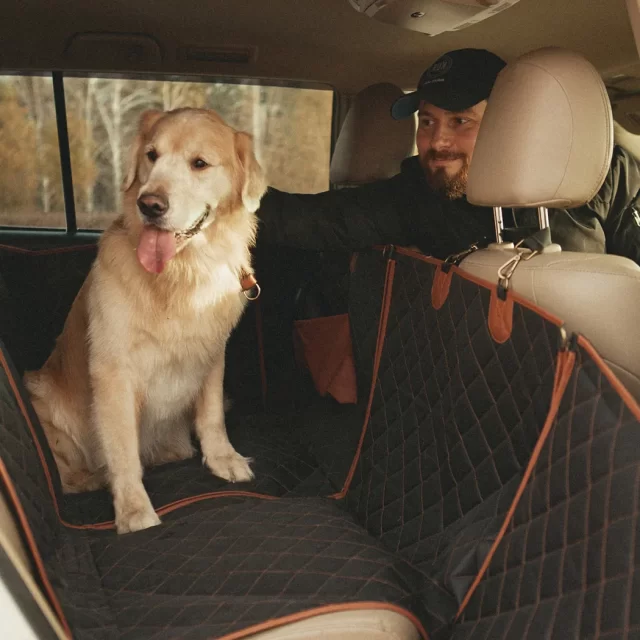
The Travel Buddy Mk. II Dog Hammock keeps the back seat covered, so shed dog fur lands on a washable surface instead of the car upholstery, pairing with the ramp during everyday use.
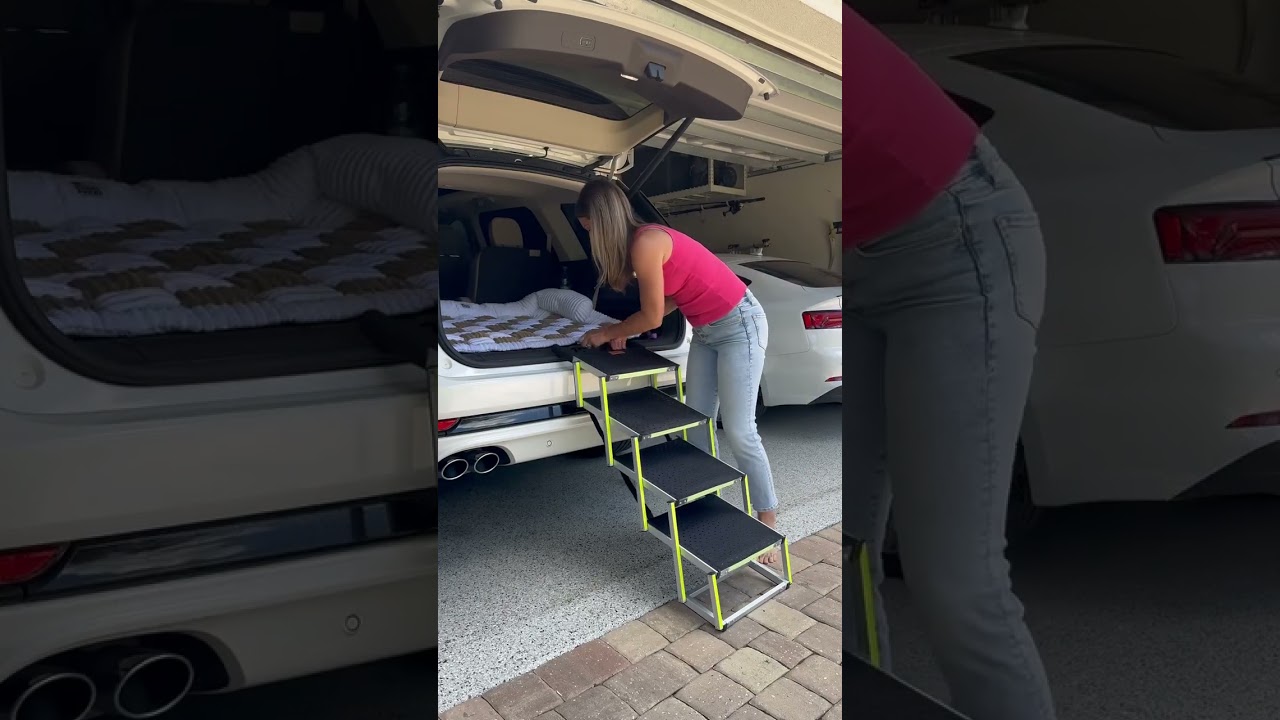
“Works well with my ford explorer, not so much with my compact car. It’s a bit too bulky for smaller vehicles but great for larger ones. My dog feels secure using this car dog ramp, and I appreciate the adjustable features 👏👏”
How to use the dog ramp
FAQ
What is the best dog ramp for senior dogs?
The best dog ramp for senior dogs has a gentle incline, a non-slip surface, side rails or raised edges, and a stable frame that does not shake. Senior dogs may also benefit from a wider walking path so they can move slowly without feeling crowded.
How to build a ramp for a small dog?
To build a ramp for a small dog, use a sturdy board, add a non-slip surface such as rubber matting or outdoor carpet, and attach raised side strips for guidance. Keep the incline gentle, sand any sharp edges, and test the ramp for movement before allowing your dog to use it.

Leave a comment