
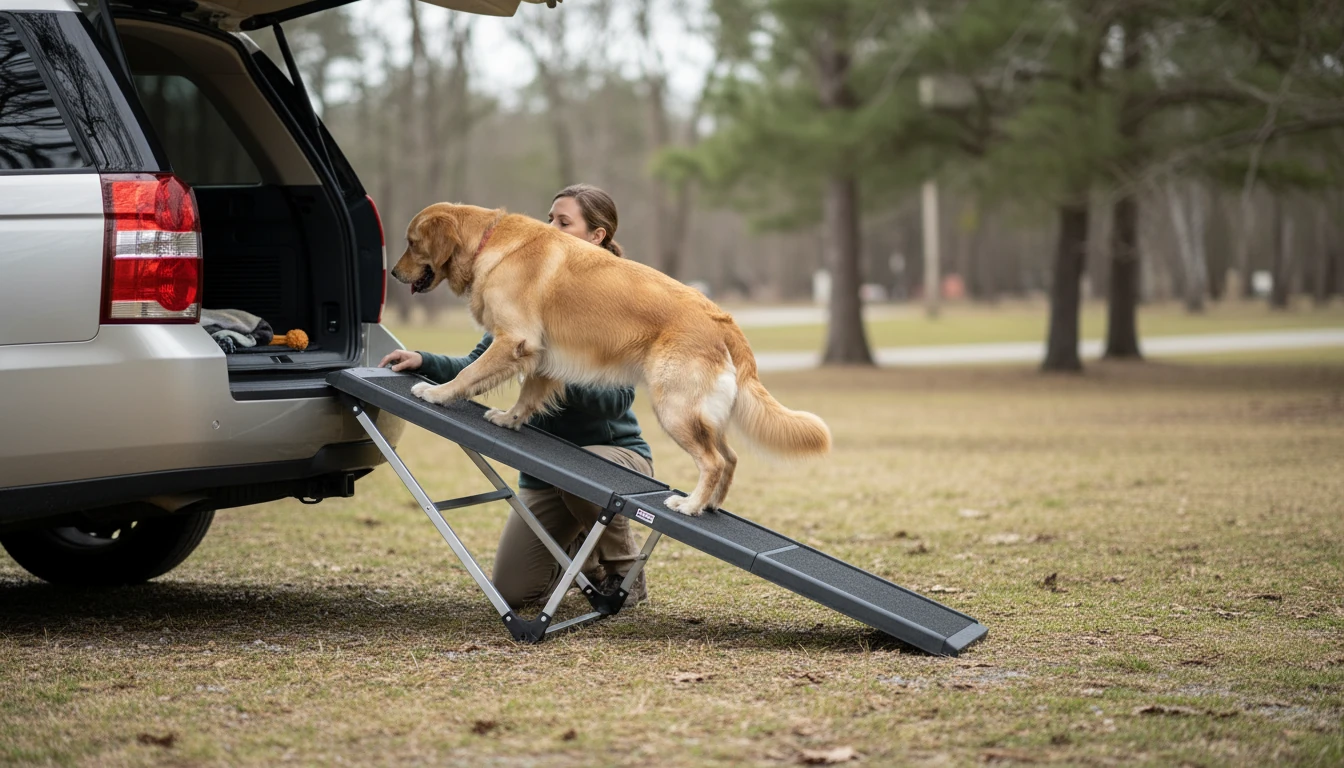
What is the correct angle for a dog ramp?
The correct angle for a dog ramp is usually between 18 and 25 degrees for most healthy adult dogs. A lower angle is easier on the joints, while a steeper angle may be acceptable only for confident, agile dogs using the ramp for a short climb into an SUV, truck, or tailgate area.
Best ramp angle for everyday vehicle use
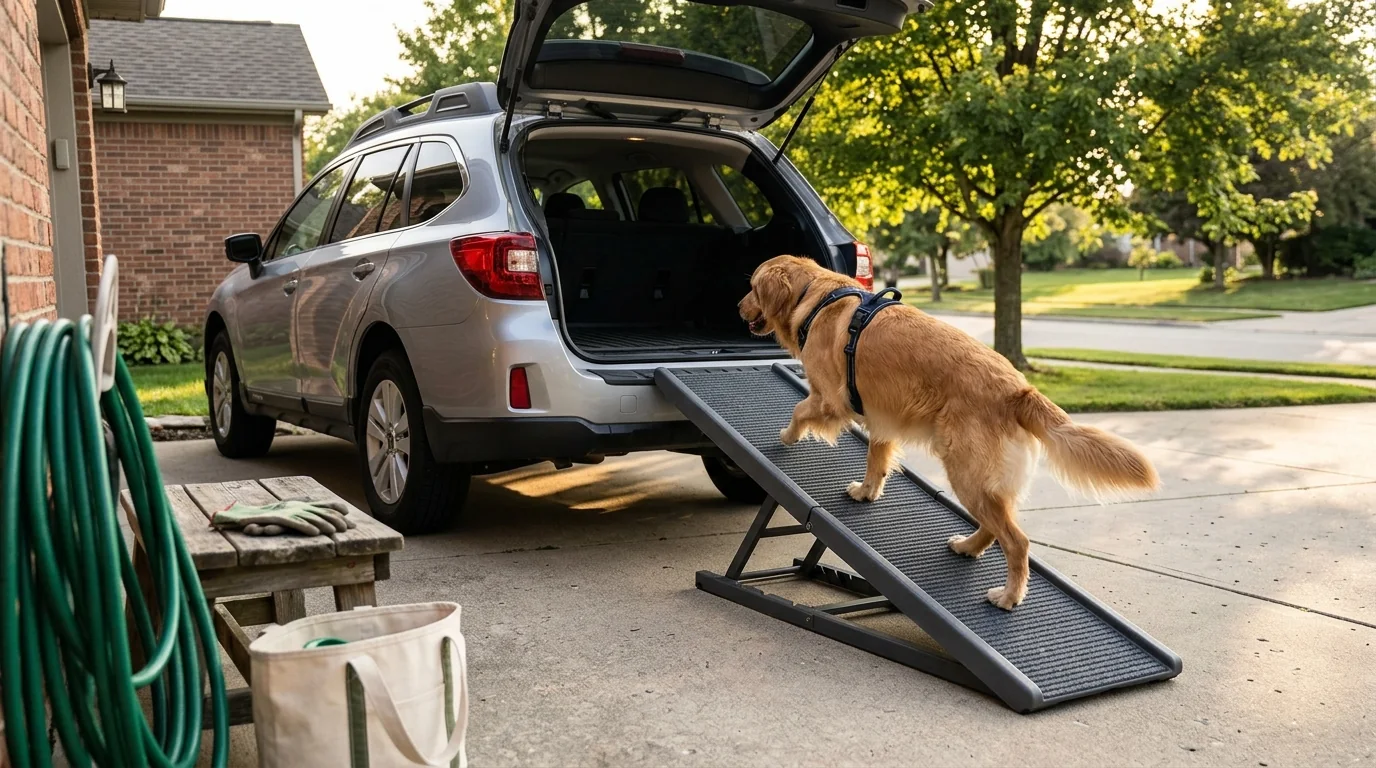
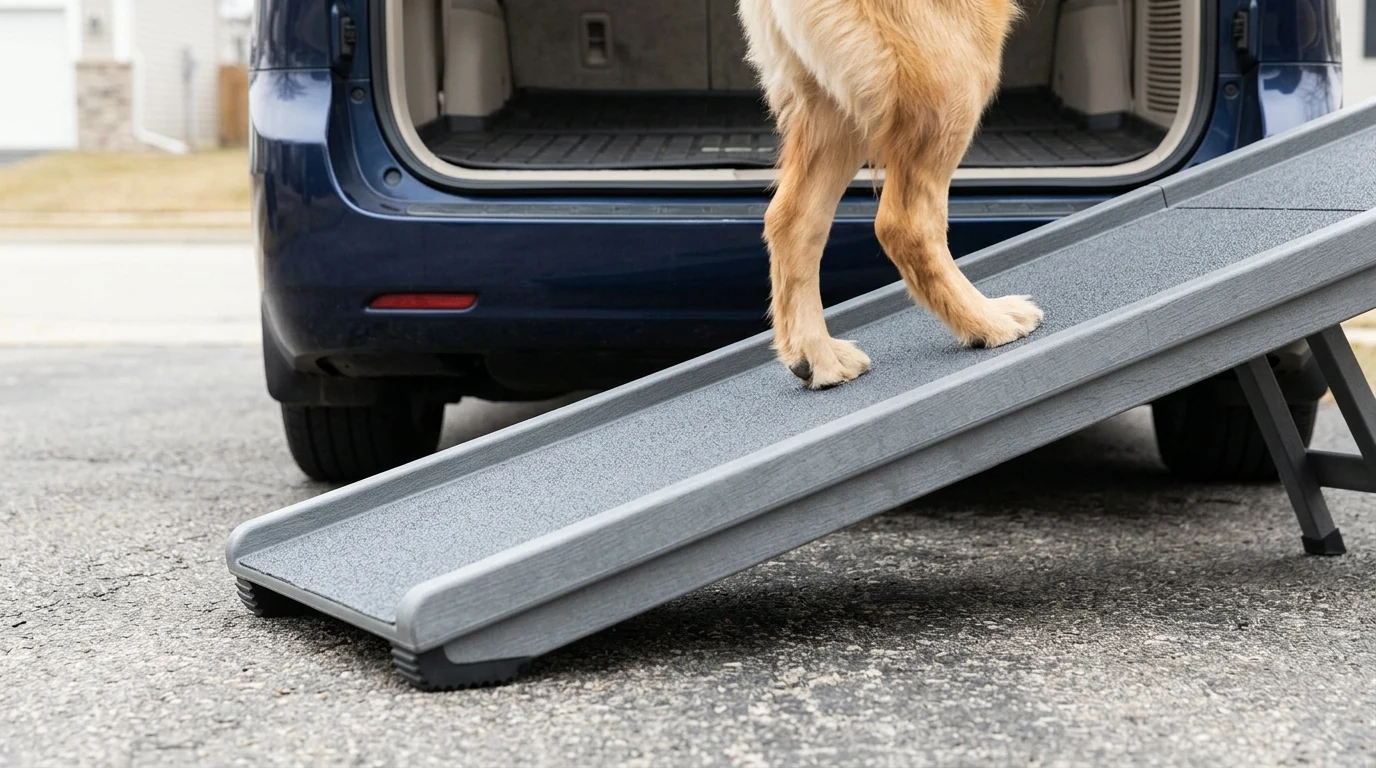
For regular loading into a car, SUV, or truck, aim for an incline close to 18 to 20 degrees when possible. This angle gives your dog better traction and reduces strain on the shoulders, hips, knees, and back.
Measure the height from the ground to the cargo floor or tailgate, then choose a ramp long enough to create a gradual slope. For more setup guidance, see the Owleys guide to tailgate car dog ramps for safer SUV and truck loading.
When a steeper angle may be acceptable
A ramp angle around 22 to 25 degrees can work for medium and large dogs that are active, steady on their feet, and already familiar with ramps. Use this range only if the ramp has a high-traction walking surface and sits securely against the vehicle.
Before letting your dog climb, check that the ramp does not wobble, slide, or flex under your dog’s weight. If your dog hesitates, slips, jumps off, or climbs with stiff movements, lower the incline or use a longer ramp.
Consider your dog’s age, size, and mobility
Puppies, senior dogs, short-legged breeds, and dogs with arthritis or hip problems usually need a gentler ramp angle. For these dogs, keep the ramp closer to 15 to 18 degrees whenever space allows.
Large dogs may handle a slightly steeper incline, but their weight makes traction and ramp stability especially important. Choose a ramp with a non-slip surface, side rails or raised edges, and a weight rating above your dog’s actual weight.
Check the ramp surface and vehicle fit
The correct angle only helps if the ramp surface gives your dog enough grip. Look for textured, rubberized, or high-traction materials that stay stable in dry and mildly wet conditions.
Confirm that the ramp is compatible with your vehicle’s cargo height and that it rests flat against the tailgate or door sill. A secure fit prevents shifting and helps your dog walk up calmly instead of rushing or leaping.
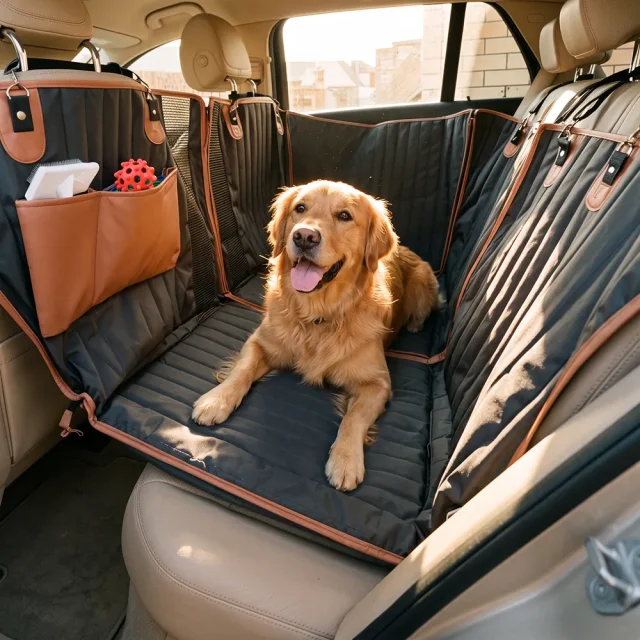
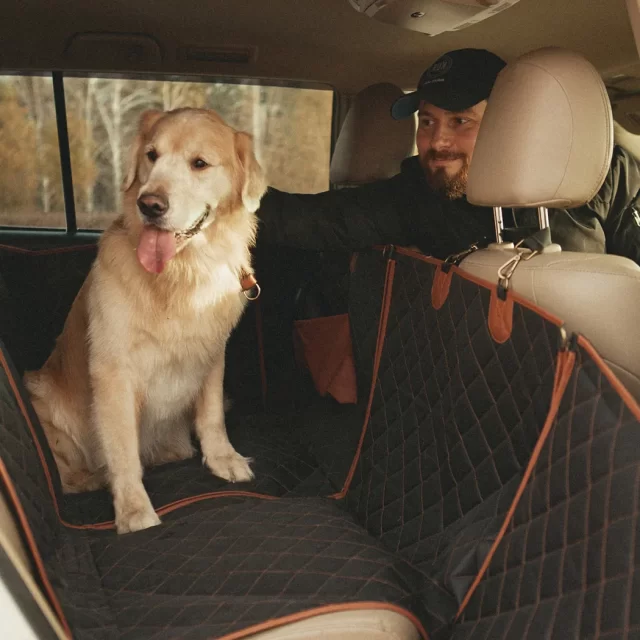
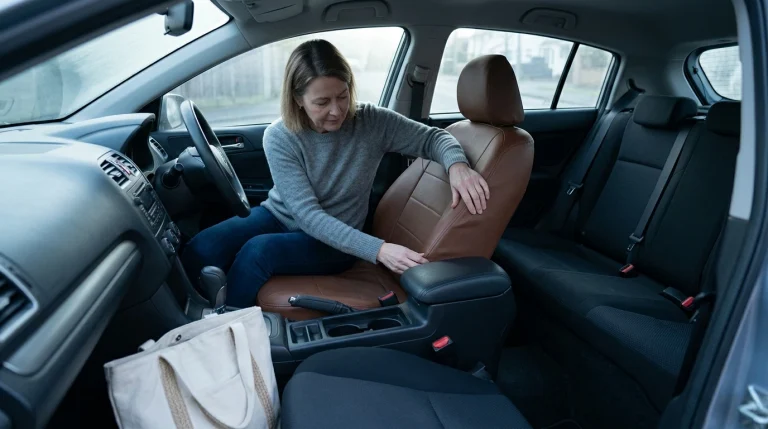
The Travel Buddy Mk. II Dog Hammock keeps the back seat covered, so shed dog fur lands on a washable surface instead of the car upholstery; it pairs with the ramp during the same trip.
How to use the dog ramp
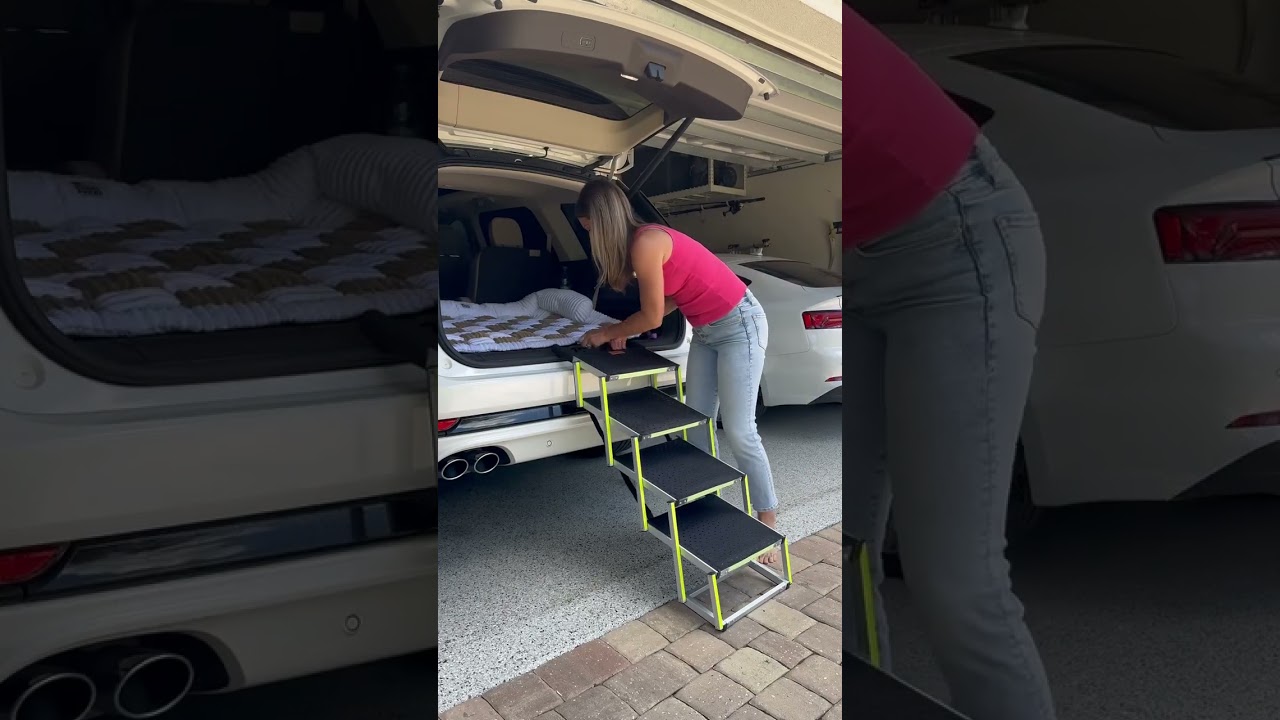
“Works well with my ford explorer, not so much with my compact car. It’s a bit too bulky for smaller vehicles but great for larger ones. My dog feels secure using this car dog ramp, and I appreciate the adjustable features 👏👏”
FAQ
What incline should a dog ramp be?
A dog ramp incline should generally be about 18 to 25 degrees, depending on your dog’s health, size, and confidence. For older dogs, small dogs, or dogs with joint issues, a gentler incline closer to 15 to 18 degrees is safer.
How long does a ramp need to be for a 2 foot rise?
For a 2 foot rise, a dog ramp should usually be about 6 feet long for a manageable everyday angle. If your dog is older, recovering, or uneasy on ramps, a longer ramp around 7 feet can create a gentler slope.

Leave a comment