
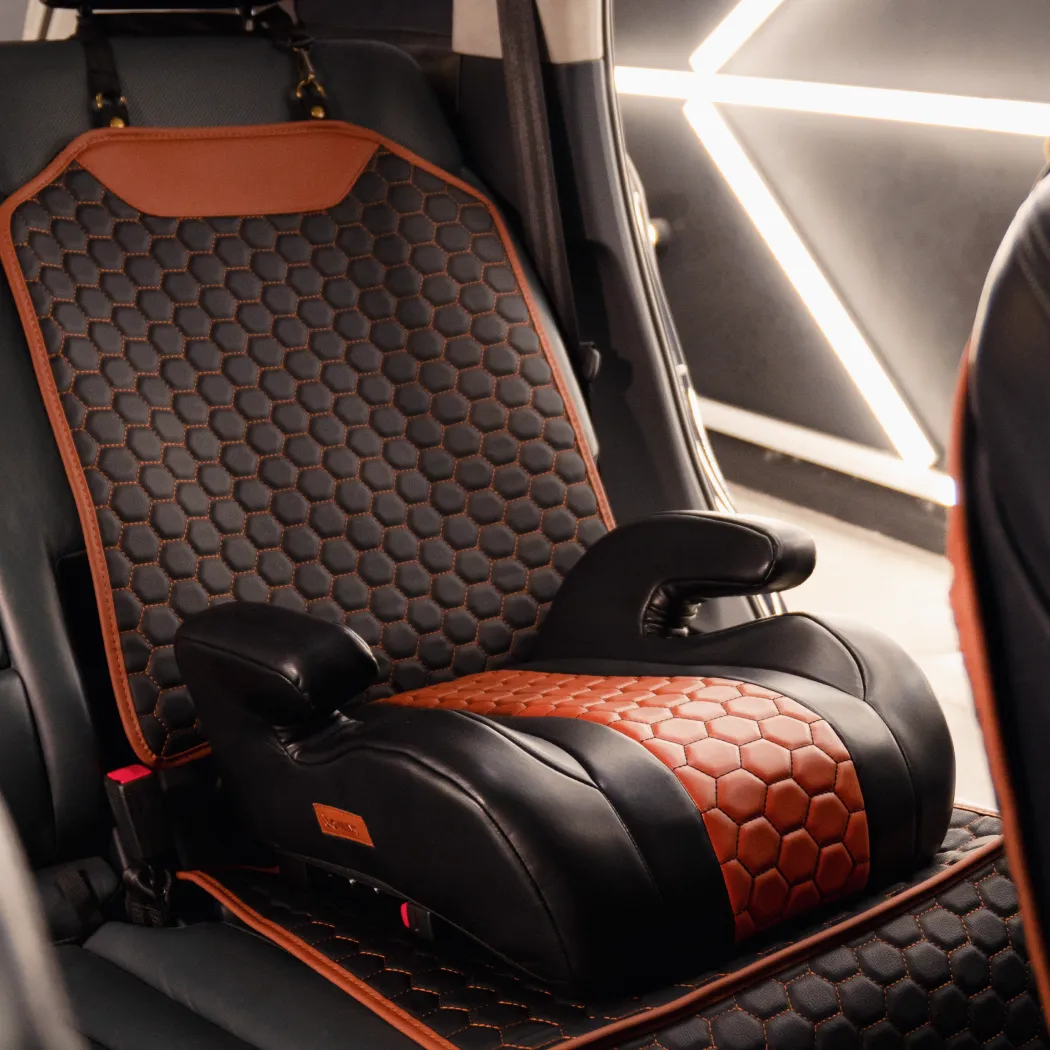
 Backless Booster Seat with LATCH | “Snug Bug” by Owleys
$157.2View product
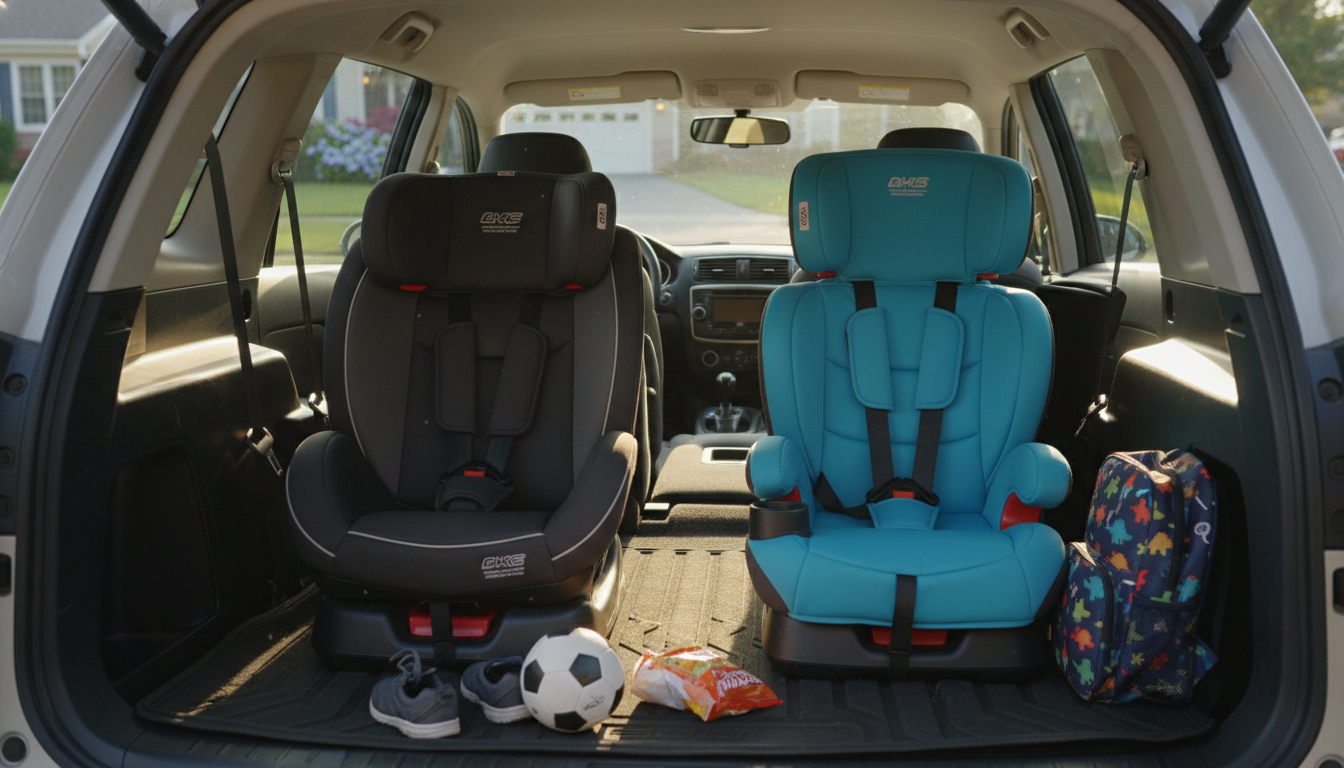
The right time to switch is when your child has outgrown their forward-facing car seat with a harness and can sit safely in a booster for the whole ride. “Outgrown” means they’ve reached the car seat’s maximum height or weight limit, or their shoulders are above the top harness slots (check your seat’s manual for the exact rules).
Age alone isn’t enough, but most kids are ready somewhere around 5–7 years old, often once they’re at least 40 pounds (many boosters start at a 40 lb minimum). Just as important as size is behavior: in a booster, the seat belt must stay positioned correctly the entire trip. If your child frequently slouches, leans, unbuckles, or puts the shoulder belt behind their back, they’re safer staying harnessed longer.
A booster’s job is to position the vehicle seat belt on the strongest parts of your child’s body. Look for:
If you’re choosing between high-back and backless styles, a high-back booster can help with belt positioning and head support in vehicles without adequate headrests. A backless booster typically works well when your vehicle seat has a headrest that reaches at least to the top of your child’s ears and the shoulder belt anchors adjust properly.
For more details on getting the best belt fit and practical setup tips (including LATCH and belt guidance), see this guide: https://owleys.com/guide-backless-booster-seat-fit-safety-latch-belt-tips/.
A proper booster fit puts the lap belt low and snug across the upper thighs/hip bones (not the belly) and the shoulder belt across the middle of the chest and shoulder (not the neck or slipping off). Your child should sit back with knees bending naturally at the seat edge and keep that position for the whole ride.
Subscribe for Owleys product launches, fresh car accessories, and exclusive Adventure Club savings up to 30% OFF.

Choose the adventure that speaks to you and receive tailored recommendations from the Owleys Adventure Club.
Get ready for exclusive member discounts, early access to new products, special gifts, and travel inspiration from the Owleys team.
Your guide will arrive within 5 minutes.Please ensure all fields are completed correctly.
error
Leave a comment